You are standing in your kitchen, a beautiful onion in front of you. You want to dice it perfectly, but your old knife is dull and slips. This is the moment you realize you need a reliable, sharp chef’s knife. In this review, we look at the imarku Japanese chef knife line, including the popular Santoku and the versatile 3-piece sets. We will help you choose the right knife for your cooking style, whether you are a home cook or a budding professional. For more on building your kitchen arsenal, check out our guide on the best knife set for BBQ.


Buying Guide: What to Look for in a Japanese Chef Knife
Blade Material and Sharpness
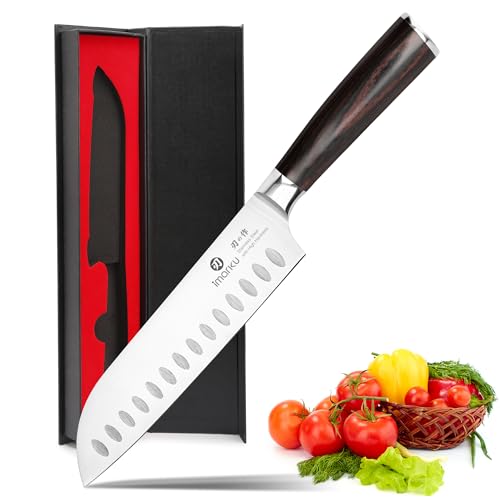
The heart of any Japanese chef knife is its blade. imarku uses Japanese high carbon stainless steel (HC steel) in most models. This steel is known for holding a very sharp edge and resisting rust and stains. The hardness of the blade, measured on the Rockwell scale, is often around 56-58 HRC. This makes the knife tough enough for daily chopping, slicing, and dicing. Look for a blade that is hand-polished to a fine angle, typically 15-18 degrees per side. This ensures razor-like sharpness that cuts through food with ease.
Handle Comfort and Ergonomics
A sharp blade is useless if the handle is uncomfortable. imarku knives feature Pakkawood handles, which are a layered wood composite. This material is stable, sanitary, and resists cracking or expanding like traditional wood. The ergonomic design reduces wrist fatigue during long cutting sessions. The handle should provide a secure grip, even when wet. This is vital for both safety and precision. If you are looking for other cookware that prioritizes comfort, see our picks for the best cookware sets for men.
Versatility and Knife Type
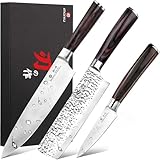
Consider how you will use the knife. A Santoku knife (like the imarku 7-inch Santoku) is a versatile all-rounder for chopping, slicing, and dicing. A traditional Gyutou (chef’s knife) is great for larger tasks and meat work. imarku offers both single knives and sets. A 3-piece set is a good starter kit, giving you a chef knife, a utility knife, and a paring knife. Think about your most common tasks. If you cook a lot of vegetables and fish, a Santoku might be ideal. For heavy meat prep, a Gyutou is better.
Edge Retention and Maintenance
A good Japanese knife should hold its edge for a long time. imarku’s high carbon stainless steel offers excellent edge retention. However, no knife stays sharp forever. You will need to hone the blade with a honing rod and sharpen it with a whetstone occasionally. Some models have a hollow edge (scalloped) that reduces sticking and makes slicing easier. This design also helps maintain the edge by reducing friction. For more on maintaining your tools, check our review of the best pre-seasoned carbon steel pan.
Final Thoughts
After evaluating the imarku Japanese chef knife lineup, we find that these knives offer impressive sharpness and quality for the price. For the home cook who wants a versatile, all-purpose blade, the imarku Santoku Knife 7 Inch with Sharp Japanese is a fantastic choice, combining a sharp edge with a comfortable handle. If you are looking to upgrade your entire knife block, the imarku 3 Pieces Knife set provides excellent value and covers all the basics. Whichever you choose, you are getting a reliable tool that will make your time in the kitchen more enjoyable.
Frequently Asked Questions
Are imarku Japanese chef knives dishwasher safe?
No. Like most high-quality knives, imarku knives are not dishwasher safe. The high heat and harsh detergents can damage the blade edge and the Pakkawood handle. Always hand wash them with mild soap and a soft sponge, then dry them immediately. This will keep the knife in top condition for years.
How does the imarku Santoku compare to a traditional chef’s knife?
The imarku Santoku is a great alternative to a Western chef’s knife. It is typically shorter (7 inches) and has a flatter blade profile, which makes it excellent for chopping vegetables and slicing. A traditional Gyutou chef’s knife has a curved edge that is better for rocking cuts and mincing herbs. For most home cooks, the Santoku is a very versatile choice.
What is the best way to sharpen an imarku knife?
We recommend using a whetstone with a grit of 1000 to 6000. Start with the coarser side to set the edge, then use the finer side to polish it. You can also use a ceramic honing rod for regular touch-ups. Avoid using electric sharpeners, as they can remove too much metal and damage the blade.
Do imarku knives come with a warranty?
Yes. imarku offers a 3-month free refund and a 1-year free exchange service on most of their knives. They also provide a lifetime warranty on the 8-inch Japanese Chef Knife. This shows confidence in their product quality. For more on choosing the best kitchen gear, see our guide on best products.