You’ve got a beautiful ribeye or a whole chicken on the cutting board, but your dull, flimsy knife is making the job a chore. Slippery grips, ragged cuts, and aching wrists can turn meal prep into a frustrating battle. The right chef knife for meat changes everything, turning heavy-duty tasks into smooth, precise work.
In this guide, we’ve evaluated 7 of the top chef knives specifically for meat cutting, focusing on blade hardness, edge retention, handle comfort, and overall build quality. Whether you’re breaking down large roasts or slicing delicate fillets, we’ll help you find the perfect tool. For those who also love prepping veggies, check out our top chef knives for chopping vegetables for a well-rounded perspective.





Buying Guide: What to Look for in a Meat-Cutting Chef Knife
Choosing the best chef knife for meat isn’t just about picking the sharpest blade. Several factors determine how well a knife performs on tough cuts and how comfortable it feels during extended use. Here are the key criteria we used to evaluate each knife.
Blade Material and Hardness
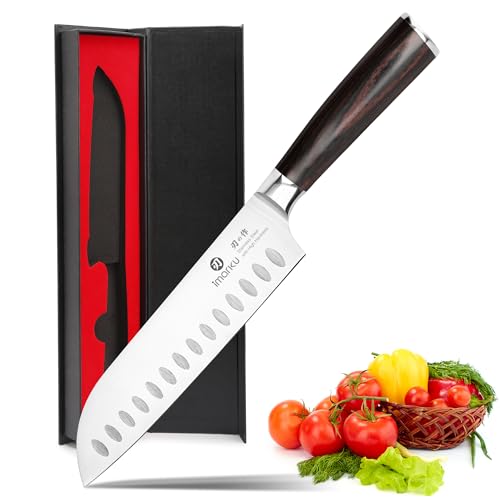
The blade’s steel determines its edge retention, corrosion resistance, and ability to handle tough meat. High-carbon stainless steel is a popular choice because it balances hardness with rust resistance. Look for blades with a Rockwell Hardness (HRC) rating of 56 or higher, which ensures the edge stays sharp through heavy use. Knives like the imarku Japanese Chef Knife feature 0.6-0.75% carbon, making it twice as hard as standard knives.
Softer steel (around HRC 52-55) is easier to sharpen but dulls faster. For meat, you want a blade that holds its edge to avoid frequent honing. The HOSHANHO Nakiri Knife boasts an HRC of 60, offering exceptional durability for demanding tasks.
Edge Geometry and Sharpness
A meat knife needs a sharp, durable edge that can slice through muscle fibers and cartilage without tearing. A thinner edge angle (15-18 degrees per side) provides superior sharpness for precise cuts, while a slightly thicker edge (20 degrees) offers more robustness for heavy chopping. The PAUDIN Chef Knife is hand-polished by craftsmen to achieve a razor-sharp edge that excels at slicing fish, chicken, and beef.
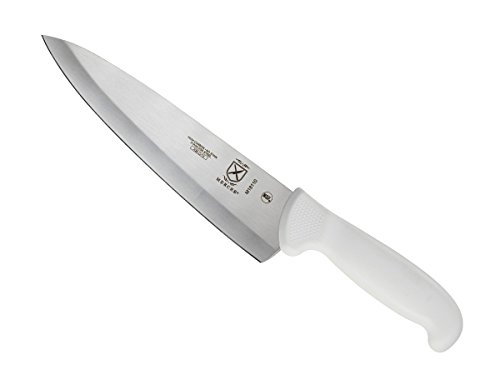
Consider the blade’s profile too. A curved belly allows for a rocking motion, which helps when mincing meat, while a straight edge with a pointed tip is ideal for piercing and slicing. The Mercer Culinary Ultimate White’s high-carbon Japanese steel maintains a razor-sharp edge, making it a favorite among professionals.
Handle Comfort and Grip
Cutting meat often requires significant pressure and repetitive motion. An ergonomic handle minimizes wrist fatigue and ensures a secure grip, even when your hands are slippery. Look for handles made from Pakkawood, which offers a balanced feel and is more stable and sanitary than traditional wood. The imarku Santoku Knife features an advanced Pakkawood handle that reduces wrist tension and provides a comfortable grip for any hand size.
Also, consider the knife’s balance. A well-balanced knife feels like an extension of your arm, giving you control and precision. The Amazon Basics Classic Chef’s Knife has a semi-bolster design that adds weight and balance, ensuring full blade access during chopping.
Versatility and Design
While a dedicated meat knife is great, a versatile chef knife can handle all your kitchen tasks. Consider whether you need a multipurpose blade that can also dice vegetables or a specialized knife like a nakiri for specific cuts. The Brewin Professional Kitchen Knives set includes multiple blades, offering flexibility for different tasks, from slicing roasts to filleting fish.
Also, look at the blade’s design features. Hollow-edge or scalloped blades create air pockets that prevent meat from sticking, making slicing easier. The HOSHANHO Nakiri Knife has a scalloped hollow pit design that offers non-stick functionality, ideal for cutting meat without resistance.
Final Thoughts
After evaluating all seven knives, our top recommendations are the imarku Japanese Chef Knife for its exceptional hardness and ergonomic Pakkawood handle, perfect for heavy-duty meat cutting, and the PAUDIN Chef Knife for its ultra-sharp, hand-polished edge and versatility across various meat types. Whether you’re a home cook or a professional, these knives offer the performance and comfort you need to tackle any meat prep with confidence.
Frequently Asked Questions
What is the best chef knife for cutting meat?
The best chef knife for meat is one with a high-carbon stainless steel blade (HRC 56+) and an ergonomic handle. The imarku Japanese Chef Knife and PAUDIN Chef Knife are top choices for their sharpness and durability.
How do I keep my chef knife sharp for meat cutting?
Regular honing with a honing steel before each use helps maintain the edge. For deeper sharpening, use a whetstone or a professional sharpening service. Avoid using a dishwasher, as it can dull the blade and damage the handle.
Can I use a chef knife for cutting bones?
No, chef knives are not designed for cutting through bones. They can chip or break. Use a cleaver or a bone saw for such tasks. For cutting meat off bones, a flexible boning knife is more appropriate.
What is the ideal blade length for a meat chef knife?
An 8-inch blade is the most versatile for meat cutting, offering a good balance between control and cutting surface. For larger roasts, a 10-inch blade might be preferable, but 8 inches is the standard for most home cooks.
If you’re also into cooking meat in Dutch ovens, you might want to check our guide on Dutch oven materials to pair your knife with the perfect cookware.