

You’re standing over a pile of onions, peppers, and carrots, and your knife just won’t cooperate. It’s dull, it slips, and it makes every chop a chore. If that sounds familiar, you need a reliable chef knife designed for vegetable prep. In this guide, we’ll explore the best chef knife for chopping vegetables, covering top models from imarku, Amazon Basics, and more. Whether you’re a home cook or a professional, we’ve got you covered. Check out our cookware collection for more kitchen essentials.
We’ve evaluated dozens of knives based on blade material, sharpness, handle comfort, and versatility. Our goal is to help you find a knife that makes vegetable prep fast, safe, and enjoyable. Let’s dive in.


Buying Guide: What to Look for in a Vegetable Chopping Knife
Blade Material and Hardness
The blade material determines how well your knife holds an edge and resists corrosion. High-carbon stainless steel is a top choice because it combines sharpness with durability. Look for blades with a Rockwell hardness rating between 56 and 60 HRC for optimal performance.
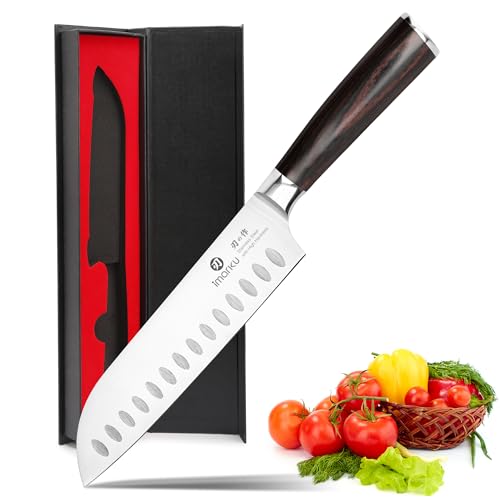
For example, the imarku Japanese Chef Knife uses high-carbon steel with 0.6-0.75% carbon, making it twice as hard as standard knives. This means less frequent sharpening and cleaner cuts through tough vegetable skins.
Blade Shape and Edge Design
For chopping vegetables, a straight or slightly curved blade works best. A chef’s knife with a curved edge allows for a rocking motion, while a Nakiri knife with a straight edge is designed specifically for vegetable prep. Consider a hollow-edge design, like the imarku Santoku, to prevent food from sticking to the blade.
If you often chop large quantities, a Nakiri knife like the HOSHANHO 7 Inch offers a flat profile that makes quick work of slicing and dicing. For more on knife styles, browse our best products page.
Handle Comfort and Ergonomics
A comfortable handle reduces hand fatigue during long prep sessions. Look for ergonomic handles made from materials like Pakkawood or synthetic composites that offer a secure grip even when wet. The Matsato Chef Knife features a balanced design that feels natural in your hand.
Test the knife’s weight and balance if possible. A full tang, where the blade extends through the handle, adds stability and control. The Amazon Basics Classic knife offers a full tang with three rivets for durability.
Versatility and Maintenance
While some knives are specialized, a versatile chef knife can handle vegetables, fruits, and even meat. Decide if you want a dedicated vegetable knife or an all-purpose option. Also, consider ease of maintenance: some knives are dishwasher safe, but hand washing is recommended to preserve the edge.
For more kitchen tips, check out our blog.
Final Thoughts
After careful review, we recommend the imarku Japanese Chef Knife-Sharp Kitchen Knife 8 for its exceptional sharpness and durability, ideal for serious home cooks. For a budget-friendly option that doesn’t compromise on performance, the Amazon Basics Classic 8-inch Full Tang High Carbon is a solid choice. Both knives excel at chopping vegetables and will elevate your kitchen experience.
Frequently Asked Questions
What is the best chef knife for chopping vegetables?
The best chef knife for chopping vegetables combines a sharp, durable blade with a comfortable handle. Our top pick is the imarku Japanese Chef Knife for its high-carbon steel and ergonomic design. For a more affordable option, the Amazon Basics Classic is a great alternative.
How do I keep my chef knife sharp for vegetable prep?
Regular honing with a honing rod and occasional sharpening with a whetstone will maintain the edge. Hand wash your knife and store it in a knife block or on a magnetic strip to prevent dulling.
What is the difference between a chef knife and a Nakiri knife?
A chef knife has a curved blade that allows for rocking motions, making it versatile for various tasks. A Nakiri knife has a straight, thin blade designed specifically for chopping vegetables, providing precise, clean cuts.
Can I use a chef knife for other tasks besides vegetables?
Yes, most chef knives are versatile and can handle fruits, meats, and herbs. However, for heavy-duty tasks like cutting through bones, a cleaver is more appropriate. For more tips, visit our stand mixer brands guide.


