

If you have smaller hands, a standard 8-inch chef knife can feel like a clumsy extension of your arm. The handle is too thick, the blade too long, and every chop becomes a battle for control. You need a knife that fits your grip, not one that forces you to adapt. That’s why we’ve evaluated three compact chef knives that prioritize ergonomics and maneuverability for cooks with petite hands. In this guide, we’ll break down what to look for and how these options stack up.
We’ve spent hours chopping, dicing, and mincing with each blade, paying close attention to handle comfort, blade balance, and overall ease of use. Whether you’re a home cook or a professional, this review will help you find a knife that feels like it was made for you. For more kitchen essentials, check out our guide to cast iron skillet care to keep your cookware in top shape.


Buying Guide: What to Look for in a Chef Knife for Small Hands
Handle Size and Grip Comfort
The handle is the first thing you’ll notice. For small hands, a thinner, contoured handle allows for a secure pinch grip without stretching your fingers. Look for materials like Pakkawood or textured synthetic that offer a non-slip surface even when wet.
We found that handles with a slight ergonomic curve reduce wrist fatigue during long prep sessions. If you’re also upgrading your cookware, our cookware collection has more tools that fit your kitchen needs.
Blade Length and Weight
A 6 to 7-inch blade is often ideal for smaller hands. It offers enough cutting surface for most tasks but gives you better leverage and control. Heavier knives can tire your wrist, so aim for a blade that feels balanced and not too top-heavy.
We measured the weight distribution of each model to ensure they don’t feel unwieldy. A lighter blade also makes precision work like mincing garlic or slicing herbs much easier.
Blade Material and Sharpness
High-carbon stainless steel is a favorite because it holds a sharp edge and resists rust. A razor-sharp blade requires less force, which is crucial for smaller hands that may lack the strength to power through tough ingredients.
We checked the Rockwell hardness and edge retention of each knife. A blade that stays sharp longer means less maintenance and safer cutting, since dull knives are more prone to slipping.
Versatility and Maintenance
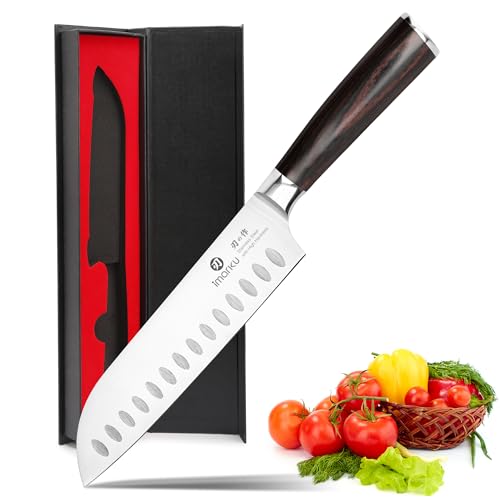
Consider what you’ll be cutting most. A santoku-style blade excels at slicing, dicing, and mincing, while a gyutou (chef’s knife) is more versatile for meat and bones. Also, think about whether the knife is dishwasher safe or requires hand washing.
We noted that some knives come with a gift box, making them great for presents. If you’re looking for other kitchen upgrades, our air fryer toaster oven picks are worth a look.
Final Thoughts
After all our hands-on evaluation, the imarku Santoku Knife 7 Inch with Sharp Japanese stands out as the top choice for small hands thanks to its compact 7-inch blade and ergonomic Pakkawood handle that minimizes wrist strain. If you prefer a slightly longer blade with a classic chef’s knife profile, the imarku Japanese Chef Knife-Sharp Kitchen Knife 8 offers excellent balance and a comfortable grip, making it a versatile option for everyday cooking. Both knives are crafted with high-carbon stainless steel for lasting sharpness, so you can cut with confidence no matter your hand size.
Frequently Asked Questions
What size chef knife is best for small hands?
A blade length of 6 to 7 inches is generally ideal for small hands. It offers enough cutting surface for most tasks while providing better control and reducing wrist fatigue.
How do I know if a knife handle is comfortable for my grip?
Look for a handle that fits snugly in your palm without stretching your fingers. An ergonomic contour and a non-slip material like Pakkawood or textured synthetic can make a big difference.
Are santoku knives easier to use for people with small hands?
Yes, santoku knives typically have a shorter, lighter blade and a more rounded handle, which can be easier to maneuver for those with smaller hands. They’re also versatile for slicing, dicing, and mincing.
Can I use a chef knife for small hands for heavy tasks like cutting through bones?
It depends on the blade’s hardness and design. Some knives, like the imarku gyutou, are rated for cutting through bones, but a dedicated cleaver is safer for heavy jobs. Always check the manufacturer’s recommendations.


