You’re standing at the stove, stirring a delicate béchamel or melting chocolate for a dessert, and you notice hot spots forming. The milk scorches at the edges while the center stays cool. This frustration is all too common with the wrong saucepan on a gas flame. In this guide, we’ve evaluated the best saucepans for gas stove cooking, focusing on models that deliver even heat, durable construction, and comfortable handling. Whether you’re a home cook perfecting your morning oatmeal or a busy parent heating up soup, we’ve got you covered. For more kitchen essentials, check out our best chef knife review and tips to complete your setup.



Buying Guide: What to Look for in a Saucepan for Gas Stoves
Material and Heat Conductivity
On a gas stove, the flame directly hits the pan’s base, so the material’s heat conductivity is crucial. Stainless steel is a classic choice, but it often needs an aluminum or copper core to distribute heat evenly. Cast aluminum, as seen in the Qelirone milk pan, offers excellent heat distribution at a fraction of the weight of cast iron.
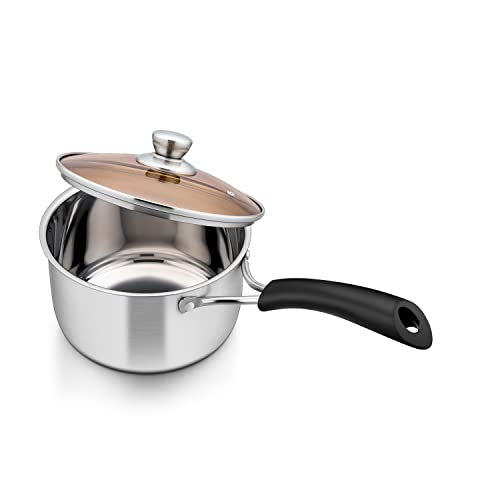
Look for pans with a thick, flat bottom that sits flush on the burner grate. This ensures maximum contact and prevents warping, which can lead to uneven cooking. Both the Herogo models feature a solid, thick flat bottom, making them reliable performers on gas flames.
Handle Design and Safety
A gas stove generates intense heat that can travel up the handle. Ergonomic, heat-isolated handles are a must to prevent burns. The Herogo saucepans feature long bakelite handles that are firmly riveted, providing a secure and comfortable grip even during prolonged cooking. The Qelirone pan’s handle includes a hanging hole, which is a space-saving bonus.
Also, consider the handle’s length. A longer handle keeps your hand farther from the flame, which is safer when you’re stirring hot liquids. Test the grip in person if you can, or rely on verified reviews from other gas stove users.
Lid and Spout Features
A well-fitting lid is essential for trapping moisture and flavor. The Herogo saucepans come with tinted glass lids that let you monitor cooking without lifting the lid, and their vent holes prevent spills. If you often make sauces or melt butter, a pour spout is a game-changer. The Qelirone milk pan has a single spout that ensures drip-free pouring, a small convenience that makes a big difference.
For more on versatile cookware, explore our top rated cast iron skillets for another stovetop essential.
Size and Capacity
Think about what you’ll cook most. A 1-quart saucepan is perfect for singles or couples, ideal for heating milk, making a quick sauce, or boiling an egg. A 2-quart size offers more flexibility for cooking grains, soups, or vegetables for two to three people. The Herogo line offers both sizes, so you can build a set that fits your needs.
Storage space is another consideration. The Qelirone’s hanging hole is a boon for small kitchens, while the Herogo pans also feature a large hole at the handle end for easy hanging. Choose a size that balances your cooking habits with your cabinet space.
Final Thoughts
Choosing the right saucepan for your gas stove comes down to your cooking style. For quick, small tasks like warming milk or melting butter, the 1.2L Enamel Milk Pan, Small Saucepan Butter Warmer is a lightweight, efficient option with a handy pour spout. If you need a durable, everyday workhorse, the Herogo 1 Quart Saucepan with Lid offers reliable stainless steel performance and a comfortable handle. Whichever you pick, you’ll notice the difference in your cooking.
Frequently Asked Questions
Can I use any saucepan on a gas stove?
Most saucepans are compatible with gas stoves, but not all perform equally. Look for a flat, thick base to ensure even heating and stability on the burner grate. Materials like stainless steel and cast aluminum are excellent choices for gas cooking.
What’s the best material for a saucepan on a gas stove?
Stainless steel with an aluminum core is a popular choice because it heats evenly and is durable. Cast aluminum is also great, offering superior heat distribution without the weight of cast iron. Both options work well on gas flames, so it comes down to your preference.
How do I prevent hot spots when cooking with a gas stove?
Use a saucepan with a thick, multi-ply base that spreads heat evenly. Also, adjust the flame so it doesn’t extend beyond the pan’s bottom. Stirring frequently and preheating the pan gradually can also help avoid scorching. For more tips, you might find our best cutting board for raw meat guide useful for your kitchen prep.
Is a 1-quart saucepan enough for cooking for two?
A 1-quart saucepan is ideal for single servings or small sides like a single portion of rice or a personal sauce. For meals for two, a 2-quart model gives you more room to cook grains, soups, or vegetables without overcrowding. Consider your typical portion sizes when choosing.