You’re standing at the stove, whisk in hand, watching your sauce threaten to scorch. The wrong saucepan can ruin a delicate hollandaise or leave your rice stuck to the bottom. This guide covers the best rated sauce pans in 2026 for every cooking style and budget.
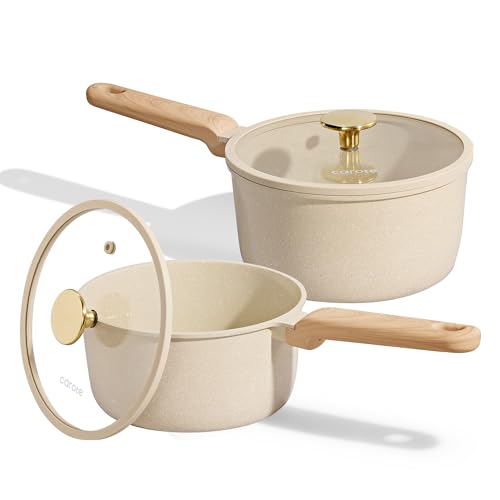
Whether you need a compact nonstick for quick oatmeal or a durable stainless steel workhorse for simmering reductions, we’ve evaluated top models from All-Clad, T-fal, SENSARTE, MICHELANGELO, CAROTE, and Farberware. Our picks are based on material, heating performance, handle comfort, and ease of cleaning. If you’re also upgrading your cookware, check our best stainless steel pan brands guide for more options.



Buying Guide: What to Look for in a Saucepan
Material: Nonstick vs. Stainless Steel vs. Ceramic
The material determines how your pan heats and how you cook. Stainless steel offers excellent durability and browning, but it requires some technique to prevent sticking. Nonstick surfaces, like those on the All-Clad HA1® Essentials Nonstick 2-Piece Sauce, make delicate tasks like melting chocolate or making cheese sauce effortless.
Ceramic nonstick coatings, found on the SENSARTE and MICHELANGELO models, are free of PFAS, PFOA, and PTFE, appealing if you prefer a more natural cooking surface. They heat quickly and clean up easily, but they may not last as long as stainless steel under heavy use.
Size and Capacity
Saucepans typically range from 1.5 to 4 quarts. A 1.5-quart pan is ideal for heating a single serving of soup or making a quick sauce. A 2-quart size is versatile for grains and reheating leftovers. Larger 3- or 4-quart pans can handle bigger batches of pasta or stew.
Consider your typical cooking tasks. If you often cook for one or two, a 1.5-quart pan like the SENSARTE Ceramic Nonstick Sauce Pan with Lid is a smart choice. For families, a 2.5-quart or larger provides more flexibility. Check out our best high end non stick pan guide for premium options.
Heating Performance and Stovetop Compatibility
Even heat distribution prevents hot spots that can scorch your sauce. Look for pans with a thick, heavy base, such as the full cap base on the Farberware Classic Series. Induction compatibility is essential if you have an induction cooktop; most modern saucepans, including the T-fal Gourmet, are induction-ready.
Aluminum and copper cores provide superior conductivity, but stainless steel is more durable. The All-Clad HA1 uses hard anodized aluminum for even heating and is oven safe up to 500°F, giving you flexibility for stove-to-oven recipes.
Handle Comfort and Lid Design
A comfortable, stay-cool handle is crucial for safe handling. The SENSARTE features a wood-grain bakelite handle that stays cool, while the MICHELANGELO has double-riveted long handles for a secure grip. Tempered glass lids allow you to monitor your food without lifting the lid, preserving moisture and flavor.
Also consider the lid’s fit. A tight-fitting lid reduces evaporation, which is ideal for simmering. The Farberware’s bell-shaped lid is designed to trap steam, while the All-Clad’s glass lids are oven safe up to 350°F.
Final Thoughts
Choosing the best rated sauce pan comes down to your cooking habits and priorities. For everyday versatility and easy cleanup, the SENSARTE Ceramic Nonstick Sauce Pan with Lid is a fantastic choice, offering healthy, non-toxic cooking at a great value. If you prefer professional-grade performance and durability, the All-Clad HA1® Essentials Nonstick 2-Piece Sauce delivers exceptional even heating and a premium feel that will last for years.
Frequently Asked Questions
What size saucepan should I buy?
A 1.5 to 2-quart saucepan is perfect for most home cooks, as it handles sauces, grains, and reheating without taking up too much storage space. If you often cook for a family, consider a 3-quart model for larger batches.
Is ceramic nonstick better than traditional nonstick?
Ceramic nonstick is free of PTFE and PFOA, making it a popular choice for health-conscious cooks. It heats quickly and cleans easily, but it may be less durable than traditional nonstick coatings. Both can be excellent, depending on your cooking style.
Can I use metal utensils on nonstick saucepans?
It’s best to avoid metal utensils on any nonstick surface to prevent scratching. Use silicone, nylon, or wooden utensils to preserve the coating’s longevity. Our guide on best budget chef knife includes tips on caring for your cookware.
Are these saucepans dishwasher safe?
Most of the models we reviewed are dishwasher safe, but hand washing is recommended to extend the life of nonstick coatings. Always check the manufacturer’s instructions. For easy cleanup, some pans, like the CAROTE set, rinse clean with just soapy water.