You love cooking healthy meals for your family, but have you considered what your utensils are made of? Many plastic or metal tools can leach harmful chemicals into food or scratch your non-stick pans, releasing toxic coatings. That is why switching to non-toxic kitchen utensils is a smart move for any home cook. In this guide, we review two outstanding sets from Umite Chef and BESTZMWK that combine safety, durability, and style. Whether you are a beginner or a seasoned chef, these tools will elevate your cooking experience. For more essential gear, check out our guide on kitchen tools for home cooks.
Buying Guide for Non-Toxic Kitchen Utensils
Material Safety and Certifications
The most critical factor is the material. Look for food-grade silicone, BPA-free construction, and stainless steel cores. Silicone is inert and does not react with food, making it a safe choice for all cooking tasks. Avoid plastic utensils that can melt or leach chemicals at high temperatures.
Both Umite Chef and BESTZMWK use high-quality silicone and stainless steel, ensuring no harmful substances enter your meals. Their sets are free from BPA, latex, and other toxins, giving you peace of mind.
Durability and Heat Resistance
Non-toxic utensils must withstand daily use without bending, breaking, or rusting. Silicone heads handle high heat up to 446°F, while stainless steel cores prevent deformation. Wooden handles on some sets offer comfort but require careful cleaning.
The Umite Chef set features a stainless steel core for toughness, while BESTZMWK uses thick 304 stainless steel handles for a lifetime of use. Both are scratch-resistant and safe for non-stick cookware.
Versatility and Storage
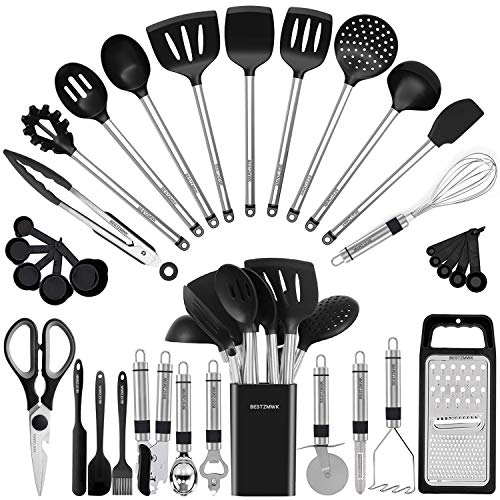
A complete set should cover all cooking needs, from flipping and stirring to serving and measuring. Look for sets with at least 30 pieces, including spatulas, spoons, tongs, and a holder. Small holes on handles allow easy hanging storage.
Both sets reviewed include 33 pieces, with Umite Chef adding hooks and a mat. For more inspiration, explore our best baking gadgets for complementary tools.
Ease of Cleaning
Non-toxic utensils should be easy to clean to maintain hygiene. Dishwasher-safe options save time, but wooden handles may require hand washing. Silicone heads resist odors and stains, ensuring long-lasting freshness.
The BESTZMWK set is fully dishwasher safe, while the Umite Chef set recommends hand washing for the wooden handles. Both are simple to maintain.
Final Thoughts
Choosing non-toxic kitchen utensils is a simple yet impactful step toward a healthier kitchen. For an affordable, comprehensive set with a wooden handle aesthetic, the Umite Chef Kitchen Cooking Utensils Set offers great value and versatility. If you prefer a more modern, fully dishwasher-safe option with stainless steel handles, the Kitchen Utensil Set-Silicone Cooking Utensils-33 from BESTZMWK is a durable, lifetime investment. Both are excellent choices that protect your cookware and your family’s health.
Frequently Asked Questions
Are silicone kitchen utensils truly non-toxic?
Yes, food-grade silicone is non-toxic, BPA-free, and does not leach chemicals into food. It is safe for high heat and does not react with acidic or oily foods. Always choose sets labeled as food-grade silicone.
Can non-toxic utensils be used with non-stick pans?
Absolutely. Silicone utensils are soft and scratch-resistant, making them ideal for non-stick cookware. They prevent scratching and extend the life of your pans.
How do I clean silicone kitchen utensils?
Most silicone utensils are dishwasher safe. For hand washing, use warm soapy water and a soft sponge. Avoid abrasive cleaners that can damage the silicone surface. For more tips, read our guide on food sticking to trays.
What should I look for in a non-toxic utensil set for 2026?
Prioritize materials like food-grade silicone, stainless steel, and BPA-free construction. Check for heat resistance up to 400°F or higher, and ensure the set includes essential tools for your cooking style. Durability and easy storage are also key.