Your air fryer smokes because something inside it is burning, and the most common culprit is leftover grease from a previous cook. When oil and food residue heat up past their smoke point, they produce visible smoke that can smell burnt and set off your smoke alarm. The good news is that almost every cause of air fryer smoke is easy to identify and fix, and you usually do not need a new appliance. In most cases, a thorough clean and a small adjustment to how you prepare your food will solve the problem within a few minutes.
Grease is the number one reason an air fryer smokes. Every time you cook, tiny droplets of oil and fat land on the basket, the walls, and the heating element. If you do not clean those surfaces, the old grease heats up and burns on the next use.
The smoke usually appears within the first few minutes of cooking, before your food has even started to brown. That early smoke is a strong sign that you are burning residue, not your meal. A quick wipe down after each cook prevents most of this.
Too Much Oil or a Low Smoke Point Oil
Air fryers need very little oil to crisp food. If you add too much, the excess oil pools in the bottom of the basket and eventually reaches its smoke point. That produces visible smoke and can leave a bitter taste on your food.
Some oils also smoke at lower temperatures than others. Extra virgin olive oil, for example, has a relatively low smoke point, so it is more likely to smoke in a hot air fryer. A neutral oil with a higher smoke point is a safer choice for most recipes.
High-Fat Foods Like Bacon and Chicken Wings
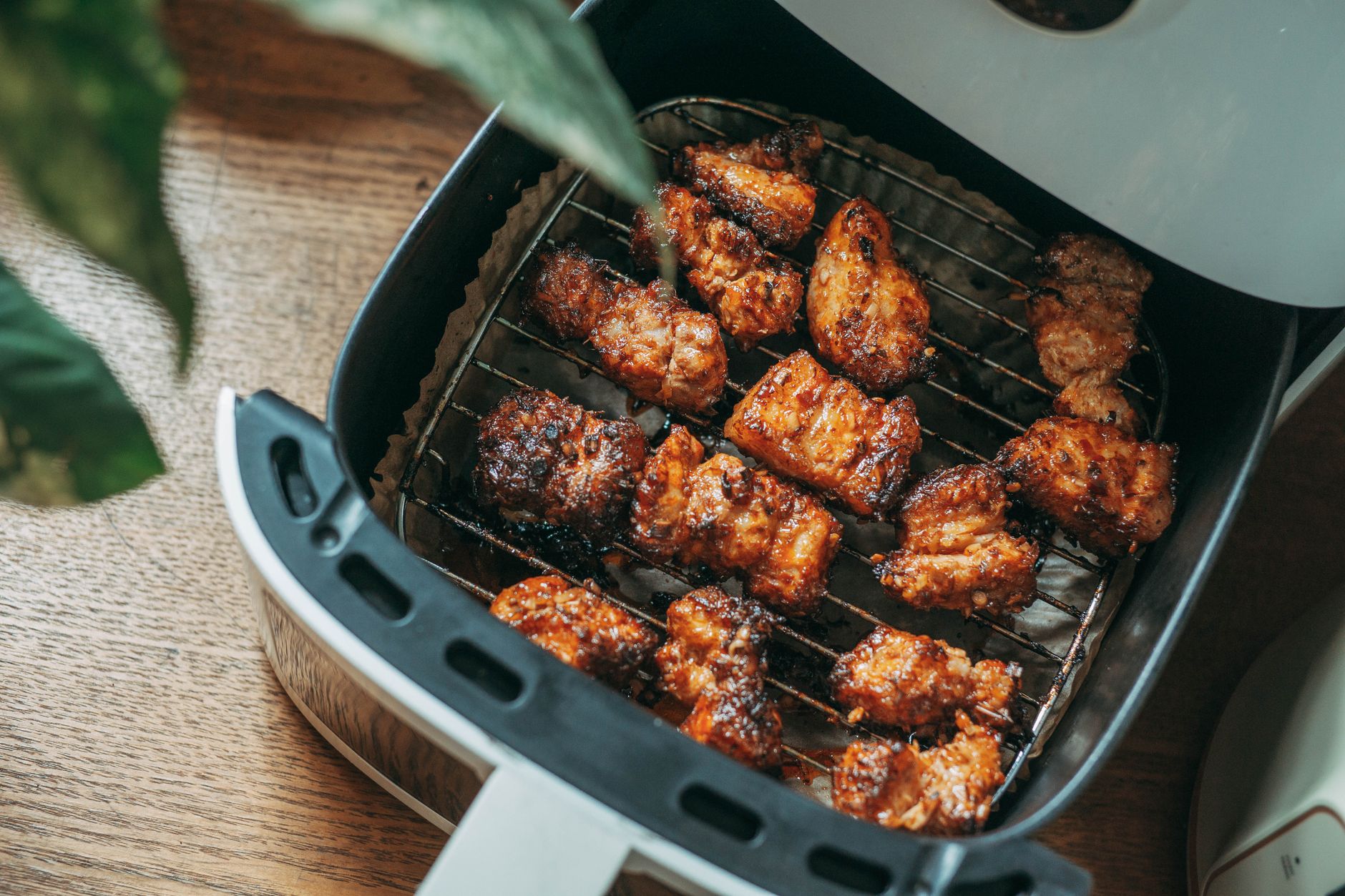
Fatty foods release their own oil as they cook. That rendered fat drips down and lands on the hot heating element, where it burns and creates smoke. Bacon, chicken wings, and fatty cuts of meat are the usual offenders.
You can still cook these foods in an air fryer. Lower the temperature slightly, cook in smaller batches, and empty the basket partway through if a lot of fat collects. This keeps the smoke under control without sacrificing crispness.
Overcrowding the Basket Blocks Airflow
An air fryer works by circulating hot air around every piece of food. When you pack the basket too full, that airflow gets blocked, and some pieces burn while others stay undercooked. The burnt edges then smoke.
Leaving space between pieces is the simplest fix. If you have a lot of food to cook, do it in batches instead of filling the basket to the top. A single layer of food cooks more evenly and produces far less smoke.
The Wrong Cooking Spray Can Smoke at High Heat
Aerosol cooking sprays often contain lecithin, propellants, and other additives that do not hold up well at high temperatures. These ingredients can burn and leave a sticky film on the basket, which then smokes on later cooks.
If you use a spray, check the label and avoid sprays with added ingredients. A pump spray bottle filled with your own oil, or simply brushing oil onto the food, gives you the same nonstick effect without the residue.
A New Air Fryer Needs a Burn-In Period
Brand new air fryers often have a thin layer of manufacturing oil and protective coating left over from the factory. The first time you heat it, that coating burns off and produces light smoke and a slight odor.
This is normal and temporary. Run the empty air fryer at a high temperature for about ten minutes in a well-ventilated room, then wipe the interior with a damp cloth. After that, the smoke should stop.
How to Stop Your Air Fryer From Smoking
Here is a quick checklist based on the causes above. Work through these one at a time, and you will find the source of the smoke in most cases.
- Clean the basket and interior after every few uses, especially if you cook fatty foods.
- Use less oil, and choose an oil with a higher smoke point for air frying.
- Trim excess fat from meat, or cook very fatty foods at a lower temperature.
- Leave space between pieces so hot air can reach every surface.
- Switch to a pump spray or brush oil directly onto food instead of aerosol sprays.
- Run a new air fryer empty at a high temperature before your first real batch.
If you find yourself overcrowding the basket because your current model is too small, a larger air fryer might be worth considering. Our air fryer size comparison explains how capacity affects cooking results and how to match the size to your meals.
Fatty foods such as wings are the usual cause of smoke, and our guide to air fryers for chicken wings covers models that handle grease and smoke better.
Frequently Asked Questions
Is it normal for a new air fryer to smoke?
Yes, a small amount of smoke during the first one or two uses is normal as manufacturing oils burn off. Run it empty at a high temperature for about ten minutes in a well-ventilated area before cooking your first meal. If smoke continues after that, check for leftover grease or food residue.
Why does my air fryer smoke even when I don’t add oil?
Even without added oil, high-fat foods like chicken thighs or frozen fries release their own fat as they cook. That fat drips onto the heating element and smokes. Leftover residue from earlier cooks can also burn, so a thorough clean is the first step to try.
Can I use olive oil in an air fryer?
Yes, but regular extra virgin olive oil has a lower smoke point and may smoke at high temperatures. A light olive oil or avocado oil is a better choice for air frying. Use just a teaspoon or two and coat the food evenly rather than pouring oil into the basket.
Should I be worried if my air fryer smokes?
Occasional smoke from grease is annoying but usually not dangerous. However, if you see thick smoke, smell burning plastic, or notice flames, turn off the air fryer and unplug it. Let it cool completely before inspecting the heating element and the interior for damage.
Most air fryer smoke comes from leftover grease, too much oil, or overcrowding, and each has a straightforward fix. Clean the basket regularly, use less oil, and give your food room to cook, and the smoke should disappear quickly. If it does not, revisit the causes above and change one thing at a time until you find the culprit.