

🔥 Black Friday Kitchen Deals 2026: picks worth watching →
You have just finished slicing a ripe heirloom tomato, and your knife glides through with almost no effort. But when you look down at your cutting board, you see deep grooves, stains from last night’s beets, and a slight warp near the edge. It is time to upgrade to a surface that respects both your blades and your workflow. This guide covers the best maple hardwood for cutting board options available in 2026, whether you are a home cook who preps daily or a weekend griller who needs a sturdy butcher block.
We have evaluated four leading boards made from North American hard maple, focusing on construction, grain type, and ease of maintenance. For more on how quality cookware complements your prep, check our Cookware category page.



Buying Guide
Grain Type: Edge Grain vs. End Grain
Edge grain boards are made with the wood fibers running parallel to the surface. They are easier to produce and often more affordable, but they show knife marks more visibly. End grain boards, by contrast, have the fibers facing upward. This self-healing property keeps the surface looking newer longer and is gentler on knife edges.
For heavy daily chopping, end grain is the professional standard. If you prefer a lighter board for occasional use, edge grain can still serve well. For more on knife-friendly surfaces, see our Best Products page.
Thickness and Weight
A board that is too thin can warp or slide around during use. Look for a thickness of at least 1 inch for edge grain and 1.5 inches or more for end grain. Heavier boards stay planted, reducing the risk of accidents when you are applying pressure.
Boards weighing around 8 to 10 pounds offer a solid feel without being unmanageable to lift and wash. Check our Best Sellers for popular heavy-duty models.
Juice Groove and Handle Design
A deep juice groove channels liquids away from your cutting area, keeping your countertop clean. This is especially valuable when you are working with meats or juicy fruits. Some boards also feature built-in handles or finger grips for easy transport from counter to table.
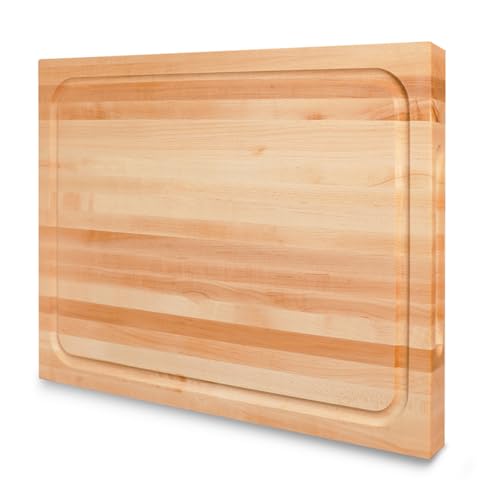
Look for grooves that are wide enough to catch runoff but not so deep that they weaken the board. Invisible inner handles, like those on the CONSDAN board, keep the design sleek while offering grip points.
Finish and Maintenance
Most maple boards arrive pre-finished with food-grade mineral oil or wax. This protects the wood from moisture and staining. Over time, you will need to reapply oil every few months to keep the board hydrated and prevent cracking.
Avoid boards that are finished with varnish or polyurethane, as these can chip and are not food safe. For more on care routines, read our HexClad vs All-Clad comparison, which includes tips on maintaining cookware surfaces.
Final Thoughts
After comparing these four maple boards, we recommend the CONSDAN Hard Maple Wood Cutting Board for Kitchen for home cooks who want a well-designed edge grain board with a juice groove and easy-carry handles, and the Maple End-Grain Cutting Board (Made in USA) from Bevel & Bond for serious cooks who prioritize a self-healing end grain surface that will last for years. Both are made from North American hard maple and arrive ready to use, so you can start chopping with confidence right away.
Frequently Asked Questions
Is maple the best wood for a cutting board?
Yes, hard maple is widely considered the best choice because of its density, tight grain, and natural resistance to moisture. It is hard enough to resist deep cuts but still gentle on knife edges compared to harder woods like oak or walnut.
How do I clean a maple cutting board?
Hand wash with warm soapy water and dry immediately with a towel. Never submerge or put it in the dishwasher. For deeper cleaning, you can scrub with coarse salt and a lemon half, then rinse and oil. For more on cookware care, see our made in vs misen guide.
How often should I oil my maple board?
Oil your board every 1 to 2 months, or whenever the surface looks dry. Use food-grade mineral oil or a beeswax-based board balm. Regular oiling prevents cracking and keeps the wood looking fresh.
Can I use a maple board for raw meat?
Yes, maple is non-porous enough for raw meat prep when properly sealed. Clean it thoroughly after each use with hot soapy water. Some cooks prefer separate boards for meat and vegetables to avoid cross-contamination. For more on kitchen tools, read our vitamix vs blendtec blender comparison.


