You have just finished prepping a mountain of vegetables for a stir fry. Your chef knife, once a trusted ally, now drags through a tomato instead of slicing cleanly. Dull knives are not just frustrating; they are dangerous, requiring more force and increasing the risk of slips. Finding the best knife sharpener for chef knives is the only solution to restore that effortless, precise cut and bring safety back to your kitchen. This guide reviews the top models from Chef’s Choice to help you choose the perfect sharpener for your needs in 2026.


Buying Guide
Sharpening Angle: 15 vs. 20 Degrees
The angle of your knife’s edge directly impacts its performance. A 20-degree edge is the traditional standard for Western knives, offering a durable, robust edge that resists chipping. In contrast, a 15-degree edge creates a finer, sharper point ideal for precision slicing, common on Asian-style knives.
Many top sharpeners, like those from Chef’s Choice, offer dual-angle options. This versatility allows you to maintain both your German and Japanese knives with a single tool. For a deeper look at which knives benefit from each angle, see our guide to the best knife brand for home chef.
Electric vs. Manual Sharpeners
Your choice between an electric and a manual sharpener depends on your volume of sharpening and desired speed. Electric models, such as the Chef’sChoice Professional Electric Knife, use motor-driven abrasive wheels to restore a razor edge in seconds. They are ideal for busy kitchens where time is critical.
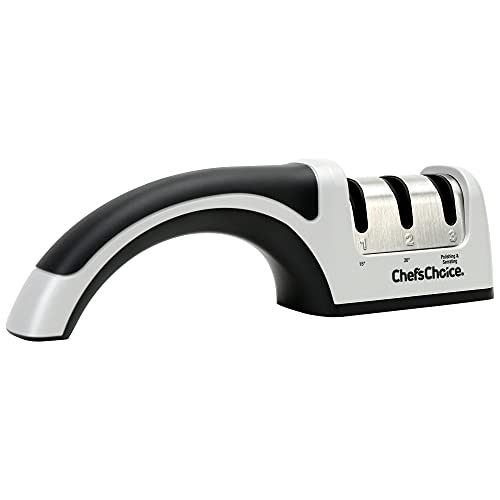
Manual sharpeners, like the Chef’sChoice Manual Knife Sharpeners for 15, offer more control and are completely portable. They are perfect for home cooks who sharpen less frequently and value a compact, cordless tool. Both types from Chef’s Choice use diamond abrasives for consistent, long-lasting results.
Abrasive Material: Diamond vs. Carbide
The abrasive material determines how effectively a sharpener removes metal to form a new edge. Diamond abrasives are the premium choice, known for their hardness and ability to sharpen the hardest steel knives quickly and evenly. All models featured in this review use 100% diamond abrasives, ensuring a superior finish.
Carbide sharpeners are cheaper but can be more aggressive and less precise. For maintaining high-quality chef knives, diamond is the clear winner for achieving a microscopically polished, durable edge. This aligns with the standards found in our Cookware category reviews.
Number of Sharpening Stages
Most quality sharpeners feature a multi-stage process. A 2-stage system typically includes a coarse slot for sharpening and a fine slot for honing. A 3-stage system adds an intermediate honing or polishing step, which can refine the edge further for exceptional sharpness.
For most home chefs, a 2-stage sharpener provides an excellent balance of speed and edge quality. Professional or enthusiast cooks may prefer a 3-stage model for that extra level of polish. Consider how often you sharpen and the level of refinement you desire when making your choice.
Final Thoughts
Choosing the best knife sharpener for chef knives comes down to your preferred method and the types of blades you own. For the fastest, most effortless results with both European and Asian knives, the Chef’sChoice Professional Electric Knife is our top recommendation. If you prefer a more hands-on, portable solution that still delivers professional-grade diamond sharpening, the Chef’sChoice Manual Knife Sharpeners for 15 is an excellent, reliable choice that will keep your knives in peak condition for years.
Frequently Asked Questions
How often should I sharpen my chef knives?
For a home cook, sharpening every 3 to 6 months is generally sufficient if you hone your knife regularly with a steel. Professional chefs may need to sharpen weekly or monthly depending on usage. The best indicator is performance; if your knife struggles to cut through a tomato skin, it is time to sharpen.
Can I sharpen a serrated knife with these sharpeners?
Yes, many of the Chef’s Choice sharpeners reviewed here are designed to handle both straight-edge and serrated knives. Look for models that specifically list serrated knife capability, as they feature a dedicated slot or setting. Always check the product specifications to ensure compatibility with your serrated blades.
What is the difference between sharpening and honing?
Honing realigns the existing edge of your knife without removing metal, maintaining its sharpness between sharpenings. Sharpening actually grinds away a small amount of metal to create a new edge. You should hone your knife weekly, but only sharpen it when honing no longer restores its cutting ability.
Are electric sharpeners safe for my expensive chef knives?
Yes, when used correctly, high-quality electric sharpeners like those from Chef’s Choice are safe and effective. They feature precision angle guides that prevent you from damaging the blade. However, they remove more metal than manual methods, so overuse can shorten a knife’s lifespan. For premium knives, a manual diamond sharpener offers more control and metal conservation. For more insights, explore our guide on best HexClad products for durable cookware that pairs well with sharp knives.