The quickest way to get rid of air fryer smell is to clean the basket and interior thoroughly with a mixture of warm water and vinegar, then run the appliance empty for a few minutes at 400°F with a lemon half inside. This neutralizes most odors immediately. However, the root cause of the smell matters just as much; if you skip identifying why the odor appears, it will keep coming back no matter how often you clean.
Why Does Your Air Fryer Smell? Common Causes
Burnt Oil and Grease Residue
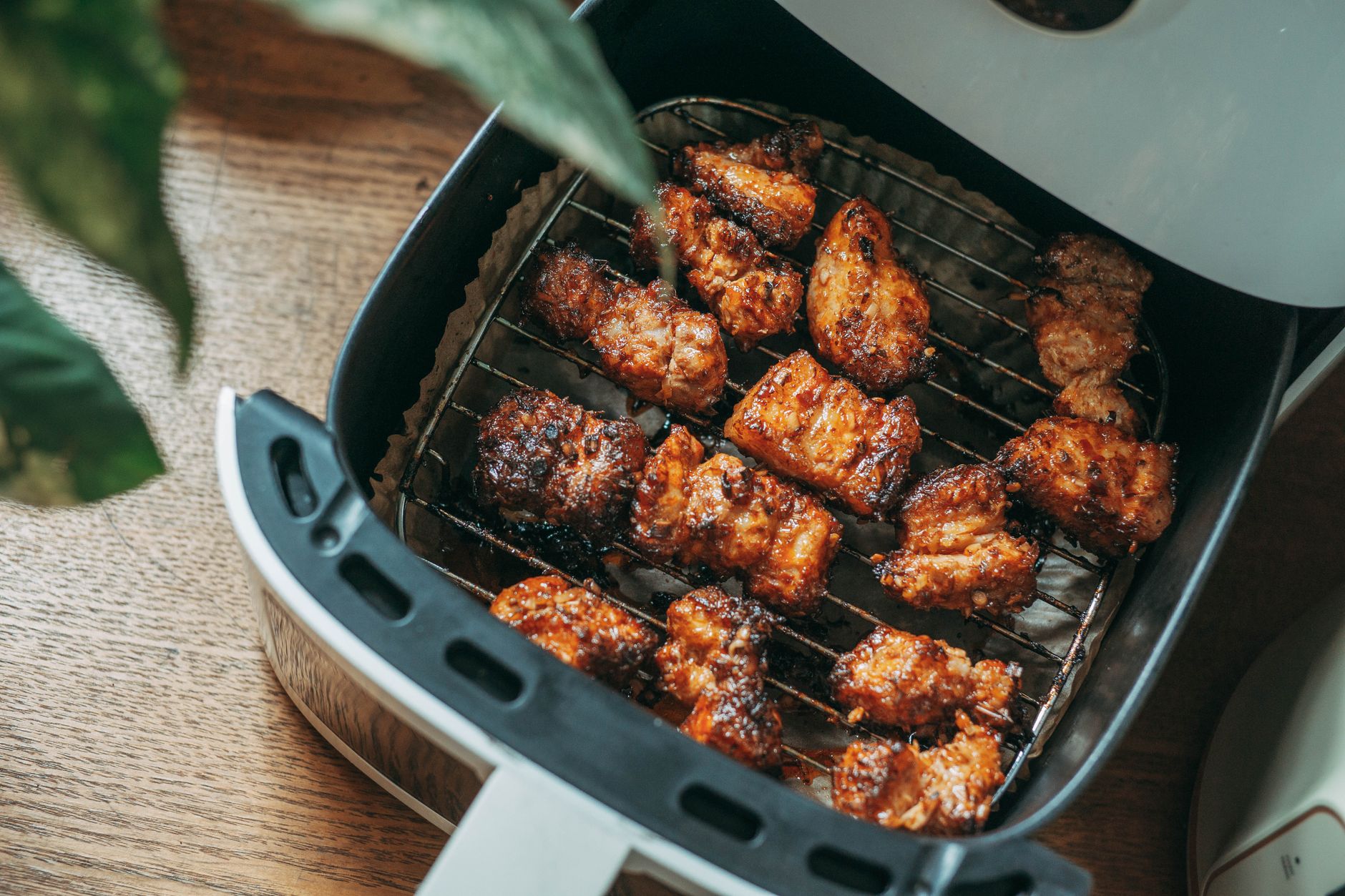
Oil that has been heated repeatedly breaks down and leaves a sticky, rancid film on the basket and heating element. This film smokes and smells like burnt cooking oil every time you use the appliance. The odor is strongest when you preheat or when the air fryer runs at high temperatures above 400°F.
If you use oil sprays or brush oil directly onto food, excess oil often drips into the bottom of the basket and burns. Over time, this creates a layered residue that produces a sharp, acrid smell. You can usually see the residue as a dark, sticky coating on the basket or the heating coil.
Food Particles Trapped in Hard-to-Reach Areas
Small bits of food, especially breaded items, can fall through the basket holes and get stuck under the tray or around the fan. These particles char and release a smoke-like odor during cooking. The smell is often worse with foods that have strong spices, like garlic powder or chili flakes.
Even if you wipe the basket after each use, crumbs can accumulate in crevices around the heating element or behind the fan guard. If you notice a smell that comes and goes, trapped food is a likely culprit. Checking under the basket and around the fan can reveal the source.
Plastic or Chemical Smell from a New Air Fryer
Brand new air fryers often emit a plastic or chemical smell during the first few uses. This is caused by manufacturing residues, oils from the metal, or insulation material heating up for the first time. The smell is usually strongest during the initial burn-in period and should fade after three to five uses.
If the smell persists beyond that, it may indicate a more serious issue like an electrical component overheating or a plastic part touching the heating element. In that case, you should stop using the appliance and contact the manufacturer. A lingering plastic smell is not normal after the first week.
Mold or Mildew from Improper Drying
If you clean your air fryer and then store it while it is still damp, mold or mildew can develop inside the basket or on the seals. This produces a musty, earthy smell that becomes noticeable the next time you turn the appliance on. The odor is often accompanied by visible black spots on the basket or tray.
This is most common in humid climates or if you put the basket away immediately after washing without drying it thoroughly. To prevent this, always air dry the basket and tray completely before reassembling and storing the air fryer.
Overheating or Electrical Issues
An electrical burning smell, like hot wiring or melting plastic, indicates a potential safety hazard. This can happen if the air fryer’s internal fan is blocked, the power cord is damaged, or the heating element is malfunctioning. The smell is sharp and distinct from normal cooking odors.
If you smell something like burning electronics, turn off the air fryer immediately and unplug it. Do not use it again until you have checked the cord and outlet, and if the smell persists, have the appliance inspected by a professional or replaced. Electrical smells are not caused by food and should never be ignored.
How to Fix and Prevent Air Fryer Smell
Here is a step-by-step approach to remove existing odors and keep your air fryer smelling fresh:
- Clean the basket and tray after every use with hot, soapy water and a non-abrasive sponge. Dry thoroughly before storing.
- For stubborn grease residue, soak the basket in a mixture of white vinegar and baking soda for 30 minutes, then scrub.
- Run a cleaning cycle: place a lemon half or a bowl of water with vinegar inside the basket, heat at 400°F for 10 minutes, then wipe down.
- Check under the tray and around the fan for trapped food particles. Use a soft brush or toothpick to dislodge any debris.
- If the air fryer is new, run it empty at 400°F for 15 minutes before first use to burn off manufacturing residues.
- Always dry every part completely before reassembling to prevent mold growth.
- If you smell plastic or electrical burning, unplug immediately and contact the manufacturer or a repair service.
If you are in the market for a new air fryer and want one that is easier to clean and less prone to odors, reviewing our comparison of Ninja Air Fryer models can help you choose a model that fits your needs.
Frequently Asked Questions
Can I use bleach to clean my air fryer and remove smell?
No. Bleach is too harsh and can damage the non-stick coating or leave toxic residues. Stick to mild dish soap, vinegar, baking soda, or lemon juice for safe and effective odor removal.
How often should I deep clean my air fryer to prevent smells?
Give the basket and tray a quick wash after every use. For a deeper clean, including wiping down the heating element and fan area, do it once a month or immediately if you notice a persistent smell.
Will running an air fryer empty remove the new plastic smell?
Yes. Running the appliance empty at the highest temperature for 15 to 20 minutes during the first use helps burn off factory residues. Ventilate the room well, and repeat if needed.
Is it safe to use my air fryer if it smells like burning plastic after a year?
No. A persistent plastic smell after many uses could indicate a worn-out heating element, melted insulation, or an electrical short. Stop using the air fryer and have it inspected or replaced.
If odors keep returning because grease works its way into seams and crevices, our roundup of basket air fryers covers simpler designs that are quicker to clean out completely.
Final Thoughts
Getting rid of air fryer smell usually comes down to regular cleaning, identifying the source of the odor, and taking prompt action. If you are considering upgrading to a model that is easier to maintain, take a look at our air fryer size comparison to find the right fit for your kitchen.