Pu-erh tea is a living beverage that evolves with each infusion, revealing layers of sweetness, earthiness, and mineral notes that demand respect and the right brewing vessel. Whether you’re a seasoned collector or exploring pu-erh for the first time, your teapot choice directly impacts flavor extraction, aroma development, and the overall experience. This guide walks you through the best teapots specifically suited for pu-erh tea, helping you find the perfect match for your brewing style and budget.
We’ve evaluated handcrafted Yixing clay pots, durable glass brewers, and traditional cast iron kettles to identify options that enhance pu-erh’s distinctive character. Whether you prefer the intimate ritual of gongfu brewing or a more relaxed steeping approach, the right teapot transforms your pu-erh sessions into moments of genuine tea appreciation.

Pros
- Significantly lower caffeine than coffee reduces afternoon jitters and sleep disruption while still boosting energy
- Premium hand-harvested black tea from dedicated plantations ensures consistent quality and authentic flavor
- Exceptional antioxidant content supports natural detoxification and may improve brain function and overall health
- 100 convenient teabags provide excellent value and eliminate messy loose-leaf brewing
- Trusted brand since 1985 with established reputation for high-quality wellness products
Cons
- Limited customer reviews available, making it harder to gauge real-world user experiences and satisfaction
- Pu-erh tea's earthy flavor profile may not appeal to those preferring lighter, more delicate tea varieties
- Requires proper steeping technique (3-5 minutes) to achieve optimal taste and avoid over-extraction
Prince of Peace Premium Pu-erh Tea delivers authentic post-fermented black tea in convenient teabag format, making it accessible for daily drinkers seeking natural wellness benefits. This product targets health-conscious consumers who want the energizing effects of tea without the caffeine overload of coffee, plus anyone interested in traditional Chinese tea culture and antioxidant-rich beverages.
The standout feature is the exceptional low-caffeine profile at just 5-15mg per cup, compared to coffee's 100-180mg, allowing you to enjoy sustained energy without jitters or sleep disruption. Hand-harvested from Prince of Peace's own Yunnan plantations, the tea boasts premium quality with high antioxidant and polyphenol content. The earthy, natural flavor and soothing aroma reflect authentic pu-erh characteristics, while the zero-calorie, zero-sugar composition suits any dietary preference.
The 100-teabag format offers excellent convenience and value, eliminating the mess of loose-leaf brewing while providing approximately 100 servings. Brewing is straightforward: steep one bag in 6-8 oz of hot water for 3-5 minutes, or prepare larger batches for iced tea. The versatility to enjoy hot or cold makes this suitable for year-round consumption and various occasions.
The main drawback is limited customer review data, making it difficult to verify long-term satisfaction or potential quality consistency. Additionally, pu-erh's distinctly earthy flavor may not suit those preferring lighter, more delicate teas like white or green varieties. Proper steeping technique is essential to avoid over-extraction, which could result in bitter taste.
Overall, Prince of Peace Pu-erh Tea represents a solid choice for tea enthusiasts and health-focused consumers seeking authentic, low-caffeine hydration with proven antioxidant benefits. The combination of premium sourcing, convenient format, and established brand reputation makes this a reliable option for daily tea enjoyment.
Hot Tea Method: Place one Prince of Peace teabag in a 6-8 fl oz cup. Add hot water and steep for 3-5 minutes before drinking. This method extracts optimal flavor and benefits in just minutes, perfect for morning or afternoon enjoyment.
Iced Tea Method: Pour 2 cups of hot water over 6 teabags in a large pitcher. Steep for 10 minutes to build robust flavor. Remove the teabags and add cold water to fill the pitcher. Serve over ice for refreshing cold-brew pu-erh tea that stays flavorful throughout the day.
Pro Tips: Adjust steeping time based on preference, starting with 3 minutes for lighter taste and extending to 5 minutes for fuller body. Use filtered water for best flavor. Pu-erh can be re-steeped multiple times, making each bag economical and sustainable for multiple servings.
Antioxidant Powerhouse: Prince of Peace Pu-erh Tea contains high levels of polyphenols and antioxidants that support natural detoxification and help protect cells from oxidative stress. These compounds work to reduce inflammation throughout the body and promote long-term wellness.
Gentle Energy Boost: With only 5-15mg of caffeine per cup compared to coffee's 100-180mg, pu-erh provides sustained energy without causing jitters, anxiety, or sleep disruption. Perfect for afternoon consumption or those sensitive to caffeine.
Brain Function Support: Regular pu-erh tea consumption may help improve focus, mental clarity, and cognitive performance thanks to its natural compounds and moderate caffeine content that enhances alertness without overstimulation.
Digestive and Wellness Benefits: The fermentation process creates beneficial compounds that may support digestive health and overall body balance. Zero calories, sugar, fat, and sodium make this an ideal choice for weight management and metabolic health.
Pros
- Exceptional versatility works on gas, electric, and ceramic stovetops, plus microwave and refrigerator safe
- Premium borosilicate glass construction resists thermal shock and temperature extremes
- Removable high-grade stainless steel infuser makes brewing and cleaning straightforward
- Non-dripping spout and ergonomic handle deliver comfortable, controlled pouring
- Generous 1000ml capacity suits individual servings or small gatherings
Cons
- Borosilicate glass requires careful handling to avoid breakage if dropped or knocked over
- Medium heat recommended for stovetop use, which may require longer heating times than metal kettles
- Requires hand cleaning for the infuser basket to maintain mesh filter integrity over time
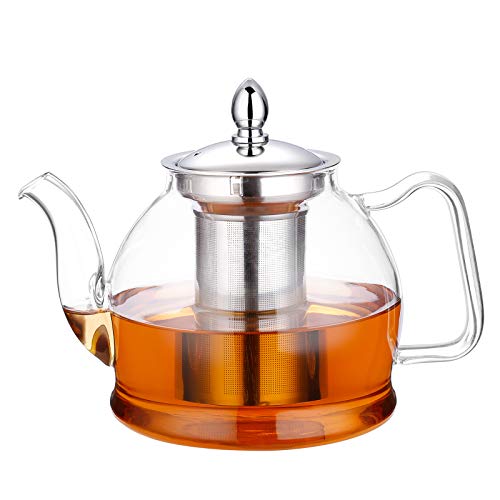
The HIWARE 1000ml glass teapot is purpose-built for tea enthusiasts who appreciate the ritual and quality of loose leaf brewing. This hand-crafted teapot combines heat-resistant borosilicate glass with a removable stainless steel infuser, making it perfect for anyone transitioning from tea bags to premium loose leaf varieties. Whether you're a daily tea drinker or an occasional enthusiast, this teapot delivers reliable performance at an accessible price point.
The standout feature is the removable high-grade 18/10 stainless steel mesh infuser, which allows full leaf expansion for optimal flavor extraction. The teapot excels across multiple brewing methods: traditional hot brewing on the stovetop, microwave heating for convenience, cold brewing in the refrigerator, or sun brewing in direct sunlight. The non-dripping spout and ergonomic handle ensure comfortable pouring without spills, while the secure lid fits whether the infuser is inserted or removed, giving you flexibility in how you brew.
Build quality stands out with thicker borosilicate glass construction designed for everyday use without compromising on aesthetics. The hand-crafted design feels premium, and the 1000ml capacity suits both individual servings and small gatherings. Cleanup is straightforward since the teapot is dishwasher safe on the top rack, though hand washing the infuser basket preserves the mesh filter quality over extended use.
The main consideration is that borosilicate glass requires careful handling to prevent breakage, and stovetop heating works best on medium heat rather than high flame. These minor limitations are typical for glass teapots and don't detract from the overall value proposition. The brand's confidence in their product is evident in their customer support guarantee.
This teapot represents excellent value for loose leaf tea enthusiasts seeking a versatile, durable brewing vessel that works across multiple heating methods. Its combination of premium materials, thoughtful design, and practical functionality makes it a smart investment for anyone serious about their tea experience.
For optimal results with your HIWARE teapot, start by filling with fresh, filtered water and heating on medium stovetop heat or in the microwave. Once water reaches your desired temperature, add loose tea leaves to the removable infuser basket and insert into the teapot. Steep times vary by tea type: green teas typically need 2-3 minutes, black teas 3-5 minutes, and oolong teas 3-7 minutes depending on leaf size and desired strength.
For cold brewing, fill the teapot with room temperature water, add loose tea to the infuser, and refrigerate for 6-12 hours. Sun brewing works similarly, but place the teapot in direct sunlight for 2-4 hours to let UV rays gently extract flavors. The removable infuser makes it easy to remove spent leaves and prevent over-steeping, ensuring consistent, delicious tea every brew.
To reheat brewed tea, you can place the teapot directly on the stovetop over medium heat, use the microwave, or set it on a tea warmer. The teapot's thick borosilicate glass retains heat exceptionally well, so your tea stays hot for extended periods without additional heating.
Buying Guide for Pu-erh Tea Teapots
Material Matters: Clay, Glass, and Cast Iron
Yixing zisha clay remains the gold standard for serious pu-erh enthusiasts. The porous structure of authentic purple clay absorbs tea oils over time, developing a patina that enriches subsequent brews. This seasoning process is particularly valuable for pu-erh, where the pot itself becomes a partner in flavor development.
Glass teapots offer transparency and versatility, letting you watch the leaves unfurl while maintaining complete flavor neutrality. Cast iron kettles, meanwhile, enhance water quality by releasing beneficial iron ions, creating softer, sweeter water ideal for pu-erh’s complex profile. Each material brings distinct advantages depending on your brewing philosophy.
Capacity and Serving Style
Pu-erh brewing typically involves multiple short infusions rather than a single steep. Smaller teapots in the 200-300ml range are perfect for gongfu-style sessions where you’re enjoying concentrated, aromatic pours shared among 2-3 people. Larger vessels work better if you prefer longer brewing times or brewing for a group.
Consider your daily routine and social tea habits. A compact clay pot fits naturally into personal rituals and tea ceremonies, while a larger glass brewer accommodates casual family gatherings. The best capacity matches how you actually drink tea, not how you think you should.
Heat Retention and Temperature Control
Pu-erh requires water temperatures between 195-212 degrees Fahrenheit, and your teapot’s ability to maintain that heat directly affects flavor extraction. Thick-walled clay and cast iron excel at heat retention, keeping water at optimal brewing temperatures throughout multiple infusions. Thinner glass vessels cool more quickly, requiring more frequent reheating.
If you’re new to gongfu-style brewing, prioritize materials with superior heat retention. This forgives slight timing variations and delivers more consistent results as you develop your technique and palate for pu-erh’s nuanced flavors.
Craftsmanship and Authenticity
Handmade Yixing teapots from artisans in Jiangsu Province carry cultural significance and superior quality compared to mass-produced alternatives. Authentic pieces feature subtle variations that machine production cannot replicate, and they develop character through use in ways factory-made pots simply cannot match.
Look for teapots with hand-engraved details, natural clay coloring, and balanced proportions that feel right in your hands. A quality vessel becomes a long-term companion in your tea journey, improving with age and use. For those exploring specialty tea brewing, investing in genuine craftsmanship pays dividends in both flavor and satisfaction.
Final Thoughts
The best teapot for pu-erh tea depends on your brewing style, available space, and how deeply you want to engage with the ritual. If you’re committed to traditional gongfu brewing and want a vessel that improves over years of use, the Yixing Zisha Teapot 10 oz Handmade delivers authentic craftsmanship and the seasoning potential that transforms pu-erh sessions into genuine tea ceremonies. For those preferring versatility and visual appeal, the HIWARE 1000ml Glass Teapot with Removable Infuser offers excellent heat resistance, easy maintenance, and the flexibility to brew everything from delicate greens to robust pu-erhs with equal success.
Frequently Asked Questions
Can I use a regular teapot for pu-erh tea? Yes, but specialized pu-erh teapots optimize the brewing experience. Clay pots develop seasoning that enhances flavor over time, while glass and cast iron offer superior heat retention and water quality benefits. A dedicated vessel transforms pu-erh from a simple beverage into a mindful practice.
How do I season a new Yixing clay teapot for pu-erh? Start by rinsing the teapot with hot water to remove any dust. Brew your chosen pu-erh repeatedly over several weeks, allowing the clay to gradually absorb tea oils. After each session, rinse with water only and dry thoroughly. This gradual seasoning process builds a protective patina that enhances subsequent brews.
What size teapot is best for pu-erh gongfu brewing? A capacity of 200-300ml is ideal for traditional gongfu sessions, allowing multiple short infusions concentrated in small cups. This size accommodates 2-3 people comfortably and maintains optimal water temperature throughout your tea session. Larger pots work for casual brewing but sacrifice the intensity and ritual of proper gongfu preparation.
Should I choose clay, glass, or cast iron for pu-erh? Yixing clay is the traditional choice and develops unique flavor-enhancing properties over time. Glass offers neutrality and versatility if you brew multiple tea types. Cast iron improves water quality and heat retention for consistent results. Your choice depends on whether you prioritize tradition, flexibility, or scientific brewing optimization. For stovetop brewing options, cast iron excels at maintaining heat across extended sessions.