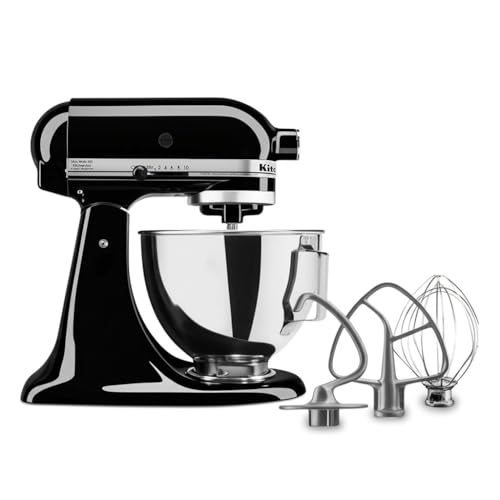
You love baking bread, but your current mixer struggles with stiff dough. The motor strains, the hook spins uselessly, and you end up kneading by hand. It’s time to consider a spiral mixer, the professional’s secret for silky, well-developed dough. In this guide, we evaluate the best spiral mixer for home use, helping you choose the right one for your kitchen and baking style.
Whether you’re a weekend pizza enthusiast or a sourdough devotee, a spiral mixer can transform your results. We’ll break down the key features to consider, from bowl capacity to speed control, and review three standout models. Let’s find your perfect dough companion.

Pros
- Dual-kneading spiral technology develops stronger gluten networks for superior bread and pizza dough quality
- Removable breaker bar and multi-functional attachments make it genuinely versatile for cakes, cookies, and whipped cream
- 58 speed settings provide precise control for different dough types and mixing stages
- Award-winning design looks modern and professional in any home kitchen
- Significantly more affordable than actual commercial spiral mixers while delivering comparable dough results
Cons
- Premium price point puts it out of reach for casual home bakers
- Requires dedicated counter space due to compact but still substantial footprint
- Steep learning curve compared to traditional stand mixers, may require experimentation to master all features
The Ooni Halo Pro Spiral Mixer is a game-changing appliance for home bakers and pizza makers who are serious about dough quality. This professional-grade stand mixer brings dual-kneading spiral technology directly from commercial bakeries and pizzerias into home kitchens, allowing you to develop the strong gluten networks that separate artisanal bread from ordinary loaves.
What sets the Halo Pro apart is its remarkable versatility combined with precision control. The 58-speed settings give you granular command over your mixing, from gentle folding at 60 RPM to aggressive kneading at over 1,000 RPM. The patent-pending removable breaker bar and four included attachments (spiral dough hook, flexible beater, geared whisk, and breaker bar) mean you can transition seamlessly from dough mixing to whisking cream to beating cake batter without swapping machines.
The build quality reflects its professional heritage and award-winning design. The 7.3-quart capacity is generous enough for substantial batches without dominating your countertop, and the modern charcoal grey finish integrates cleanly into contemporary kitchens. The removable bowl and included splash guard make cleanup straightforward, while the geared whisk and flexible beater attachments feel durable and well-engineered.
The main drawback is the investment required. At this price point, the Halo Pro targets dedicated home bakers rather than casual users. Additionally, mastering all 58 speed settings and understanding which attachment works best for different recipes takes time and experimentation compared to conventional stand mixers.
For serious home bakers and pizza enthusiasts willing to invest in equipment, the Ooni Halo Pro delivers professional results that justify its cost. It's an exceptional choice if superior dough quality is your priority and you want the flexibility to handle multiple baking tasks with one machine.
Capacity: 7.3 quarts
Speed Settings: 58 precision levels, 60 to 1,000+ RPM
Mixing Technology: Dual-kneading spiral with rotating bowl and spiral dough hook
Included Attachments: Spiral dough hook, flexible beater, geared whisk, removable breaker bar
Bowl Type: Removable stainless steel bowl with splash guard and spout
Design Awards: Red Dot Design Award 2025, IF Design Award 2025
Color: Charcoal Grey
Power: US power cord included (region specific)
Best For: Dedicated home bakers, sourdough enthusiasts, pizza makers, and anyone serious about developing professional-quality dough at home. Perfect for those who bake regularly and want to elevate their results.
Consider Alternatives If: You bake only occasionally, have limited counter space, or are looking for a budget-friendly mixer for basic mixing tasks. A traditional stand mixer may better suit casual bakers.
Investment Justification: If superior dough quality directly impacts your baking satisfaction and you value versatility for multiple baking tasks, the professional spiral mixing technology and precision control justify the premium price.

Pros
- Lightweight and portable at under 7 lbs, easy to store in cabinets or move between counters
- Excellent value at budget-friendly price with solid 4.4-star rating from thousands of verified users
- 6 speed options provide flexibility for mixing bread dough, batters, meringues, and whipped cream
- Sturdy stainless steel bowl and upgraded metal attachments built for durability and longevity
- Tilt-head design and transparent lid make loading, unloading, and cleaning convenient
Cons
- 3.2Qt capacity is quite small and unsuitable for large batch baking or commercial use
- Strong initial torque at startup requires careful handling and cautious operation
- Limited to light and moderate mixing tasks, not recommended for heavy-duty or frequent professional baking
The Kitchen in the Box Stand Mixer is a compact, lightweight electric mixer designed specifically for small households, new bakers, couples, and anyone with limited kitchen space. At under 7 pounds and measuring just 12.9 x 7 x 10.2 inches, this 3.2Qt mixer fits easily into apartment kitchens and can be stored away when not in use. It's an excellent entry-level option for home bakers who want the convenience of a stand mixer without the bulk and cost of full-size models.
Performance-wise, this mixer delivers solid results with its 6-speed settings and planetary rotation technology. The speed range accommodates everything from gentle stirring and meringue whipping to bread dough kneading and thick batter mixing. The included attachments, aluminum dough hook and flat beater plus stainless steel whisk, are durable and easy to swap. The transparent anti-splash lid prevents ingredient splatter, while the tilt-head design makes bowl removal and cleaning straightforward. Four anti-slip suction feet keep the unit stable during operation, preventing unwanted movement or vibration.
The build quality is respectable for the price point. The stainless steel bowl is removable and easy to clean, and the upgraded metal attachments feel sturdy and well-constructed. The gasket at the top joint prevents food residue from accumulating in hard-to-reach areas. However, note that the mixer features a mechanical speed control system with stronger initial torque at startup, so users should be cautious when first turning it on.
The main limitation is bowl capacity. At 3.2 quarts, this mixer is genuinely small and best suited for everyday use with one to two people or small family baking. Professional bakers, frequent large-batch users, or anyone regularly handling substantial quantities should consider a larger capacity model instead. This is not a drawback for the intended audience but an important consideration for buyers.
Overall, the Kitchen in the Box Stand Mixer is a smart, budget-conscious choice for small households and apartment dwellers seeking convenient mixing without sacrificing counter or storage space. It handles daily baking tasks reliably and comes with a full starter kit of attachments. For light to moderate home baking needs, this compact mixer delivers excellent value and performance.
Capacity and Dimensions: 3.2Qt stainless steel removable bowl, 12.9 x 7 x 10.2 inches overall dimensions, weighs less than 7 lbs
Power and Performance: 120V, 60Hz, 300W motor with 6 adjustable speed settings and planetary rotation mixing technology
Included Attachments: Aluminum dough hook, flat beater, stainless steel whisk, and transparent anti-splash lid
Design Features: Tilt-head design for easy bowl access, 4 anti-slip suction feet for stability, gasket at top joint to prevent food splatter, mechanical speed control system
Ideal For: New home bakers, small households of 1-2 people, apartment dwellers with limited space, couples, seniors seeking lightweight appliances, budget-conscious home cooks who want stand mixer convenience without the expense
Not Recommended For: Professional bakers, large families, frequent large-batch bakers, commercial kitchen use, anyone who regularly mixes heavy doughs or large quantities
Best Use Cases: Daily home baking, small batch cookie and cake making, whipping cream and egg whites, light bread dough kneading, mixing cake and pancake batters, small kitchen environments where space is at a premium
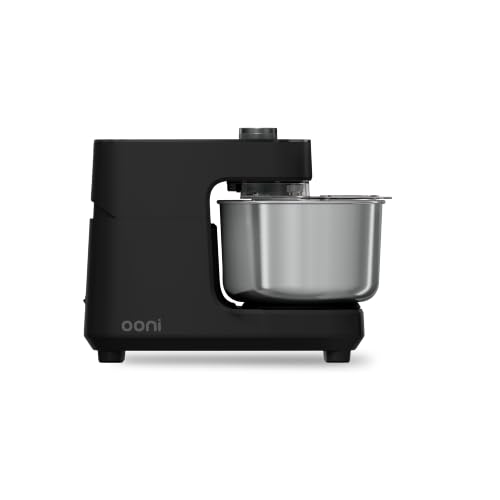

Buying Guide: How to Choose the Best Spiral Mixer for Home Use
Before you invest, consider these essential factors. They will determine how well the mixer fits your baking habits and kitchen space.
Bowl Capacity: Match Your Baking Volume
Think about how much dough you typically make. A compact mixer with a 3.2-quart bowl is perfect for single loaves or small batches, ideal for couples or new bakers. If you often bake for a crowd or make multiple loaves at once, a larger capacity, like the 7.3-quart Ooni Halo Pro, will save you time.
Remember that the bowl size also affects the machine’s footprint. A smaller mixer is easier to store, especially in tight kitchens. Consider your counter space and storage options before committing to a large unit.
Speed Control and Mixing Technology
Spiral mixers excel at developing gluten because they mimic the action of a baker’s hands. Look for a machine with multiple speed settings, from a slow fold to a fast knead. The Ooni Halo Pro offers 58 speeds, giving you precise control for every dough type.
Planetary mixers, like the Kitchen in the box models, use a different action but are still effective for home bakers. They offer a range of speeds for whipping, beating, and kneading. Choose the technology that matches your primary needs.
Attachments and Versatility
A good mixer should do more than just knead dough. Look for attachments like a whisk for meringues, a beater for cakes, and a dough hook for bread. The Ooni Halo Pro includes a breaker bar, flexible beater, spiral dough hook, and geared whisk, making it a true multi-purpose tool.
For compact mixers, ensure the attachments are sturdy and easy to clean. Detachable parts make maintenance a breeze. Check if the attachments are dishwasher safe or require hand washing.
Build Quality and Stability
Mixing stiff dough can cause a lightweight machine to wobble or “walk” across the counter. Look for a mixer with a heavy base or suction feet. The Kitchen in the box mixer features four anti-slip suction feet for stability.
A durable motor is also crucial. Read reviews to see how the mixer performs under heavy loads. A well-built machine will last for years, making it a worthwhile investment for your baking journey.
If you’re also exploring other kitchen upgrades, check our guide to cast iron skillet gift sets or see how a ceramic cookware set can complement your new mixer.
Final Thoughts
Choosing the best spiral mixer for home use depends on your baking frequency and batch sizes. For the home baker who wants professional results and ultimate control, the Ooni Halo Pro Spiral Mixer is an exceptional choice, offering a generous bowl and unmatched speed precision. If you’re just starting out or have limited space, the Kitchen in the box Stand Mixer,3.2Qt Small is a reliable, compact companion for everyday baking. Whichever you choose, you’re on your way to better bread.
Frequently Asked Questions
Can I use a spiral mixer for small batches?
Yes, many spiral mixers are available in compact sizes. The Kitchen in the box models feature a 3.2-quart bowl, perfect for small families or individuals. They can handle a single loaf or a batch of cookies with ease.
What is the difference between a spiral mixer and a planetary mixer?
A spiral mixer has a stationary bowl and a spiral-shaped hook that rotates, while a planetary mixer has a moving bowl and a hook that rotates on its own axis. Spiral mixers are generally better for heavy dough, while planetary mixers are more versatile for various tasks.
How long should I knead dough in a spiral mixer?
Kneading times vary depending on the recipe and mixer speed. As a general rule, most doughs take 8-12 minutes to reach the windowpane stage. Start with a lower speed and gradually increase, monitoring the dough’s consistency.
Are spiral mixers worth the investment for home bakers?
If you’re serious about bread making, yes. A spiral mixer develops gluten more efficiently than a standard mixer, resulting in better texture and oven spring. It also saves you time and effort, especially for high-hydration doughs. For more kitchen inspiration, see our review of the Instant Pot Rio Mini.
For more kitchen gear comparisons, you might also like our Breville vs Cuisinart air fryer oven showdown or explore the best digital air fryer toaster oven.