

You’re tired of lugging heavy water bottles or relying on a pitcher that never quite removes that odd taste. Under-sink reverse osmosis (RO) systems offer a permanent, high-performance solution, delivering filtered water straight from your tap. Whether you’re concerned about lead, chlorine, or just want better-tasting water, this guide covers the best under-sink RO systems to help you choose the right one for your home.
We’ve evaluated top models from trusted brands like Waterdrop, iSpring, APEC, and Express Water, focusing on filtration performance, ease of installation, and smart features. From tankless designs that save space to systems with alkaline remineralization, we’ve got you covered. If you’re also considering a new sink, check out our guide on how to unclog a kitchen sink for maintenance tips.



Buying Guide: What to Consider in an Under-Sink RO System
Filtration Stages and Certifications
The number of stages indicates how thoroughly the water is filtered. A standard 5-stage system removes sediment, chlorine, and heavy metals, while advanced systems add alkaline remineralization or UV protection. Look for certifications like NSF/ANSI 58 and 372, which confirm the system’s ability to reduce contaminants and use lead-free materials.
For example, the iSpring RCC7AK-BLK is certified to reduce up to 99% of over 1,000 contaminants, including lead and fluoride. If you have specific water quality issues, consider a system with additional stages tailored to your needs.
Tankless vs. Tank-Based Design
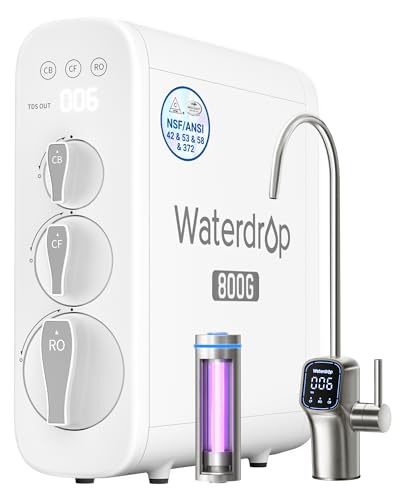
Tankless systems, like the Waterdrop G3P600, save significant under-sink space and provide water on demand without a storage tank. They are more compact and often feature higher flow rates. Traditional tank-based systems, such as the APEC ROES-50, are generally more affordable and don’t require electricity, but they take up more space and may have slower flow rates.
If you have a small cabinet or want a modern look, tankless is the way to go. For larger families or if you’re on a budget, a tank system might be more practical.
Water Efficiency and Flow Rate
Water efficiency is measured by the pure-to-drain ratio. A system with a 2:1 or 3:1 ratio produces less wastewater, which is better for the environment and your water bill. Flow rate determines how quickly you get water; a higher GPD (gallons per day) means faster filling.
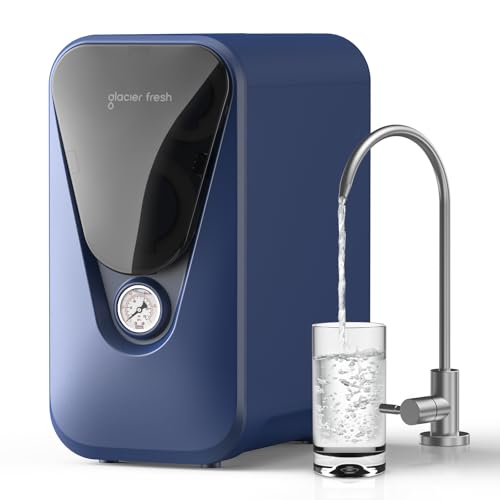
For instance, the GLACIER FRESH GFU03 offers a 3:1 pure-to-drain ratio and 800 GPD, filling a cup in just 8 seconds. If you have low water pressure, consider a system with a booster pump, like the iSpring RCC7P-AK.
Installation and Maintenance
Most under-sink RO systems require some DIY skills, but many come with quick-connect fittings and clear instructions. Tankless systems are often easier to install, with some models like the Waterdrop G3P600 allowing filter changes in seconds without moving the unit.
Check your under-sink space and whether you need to drill a hole for a dedicated faucet. For those with well water, consider a system that handles specific contaminants; our guide on best kitchen sinks for well water can provide additional insights.
Final Thoughts
Choosing the best reverse osmosis system under sink depends on your household needs, space, and budget. For a high-capacity, space-saving option, the Waterdrop G3P600 Tankless Reverse Osmosis Water is an excellent choice with its smart faucet and 2:1 efficiency. If you prefer a more traditional system with proven reliability, the APEC Water ROES-50 offers solid performance and easy DIY installation. Both deliver great-tasting water you can trust.
Frequently Asked Questions
What is the best reverse osmosis system under sink?
The best system depends on your needs. The Waterdrop G3P600 is great for large families with its 600 GPD capacity and tankless design, while the APEC ROES-50 is a budget-friendly option that still removes up to 99% of contaminants. Consider your water quality, space, and budget when choosing.
Do under-sink RO systems waste a lot of water?
Modern RO systems are more efficient than ever. Look for models with a high pure-to-drain ratio, like 2:1 or 3:1, which means less wastewater. For example, the GLACIER FRESH GFU03 has a 3:1 ratio, producing just one cup of waste for every three cups of pure water.
Can I install an under-sink RO system myself?
Yes, many under-sink RO systems are designed for DIY installation. Models like the iSpring RCC7AK-BLK come with quick-connect fittings and detailed instructions. However, you may need to drill a hole in your countertop for a dedicated faucet. If you’re not comfortable, professional installation is always an option.
How often should I replace the filters in my RO system?
Filter replacement depends on your water usage and quality. Generally, pre-filters should be changed every 6-12 months, while the RO membrane can last 2-3 years. Many systems have filter life indicators, like the Waterdrop G3P800, to remind you when it’s time to swap them out.
For more kitchen tips, check out our articles on top mount workstation sinks and double bowl stainless steel kitchen sinks.


