

You’ve spent the season growing vegetables, picking fruits, or sourcing quality meats, and now you want to preserve them properly. Home canning requires equipment you can trust, and a reliable pressure cooker or canner is essential for safely processing low-acid foods like vegetables, meats, and seafood. This guide walks you through the top pressure cookers designed specifically for canning, helping you choose the right size, capacity, and safety features for your household’s preservation needs.
Whether you’re just starting your canning journey or you’re an experienced food preserver looking to upgrade, we’ve evaluated options across multiple capacity levels and price points. Each model reviewed here meets USDA standards for safe pressure canning and includes the safety features you need for confident, worry-free food preservation.
Pros
- Exceptional capacity handles serious batch canning projects in a single layer, maximizing efficiency
- Comprehensive safety features and certifications provide confidence for users of all experience levels
- Universal stove compatibility means no need to replace cookware when switching appliances
- Significantly reduces cooking times for tough proteins and legumes without pre-soaking
- Durable construction with composite bottom prevents warping and maintains even heat distribution
Cons
- Large size and weight may present storage challenges in smaller kitchens or apartments
- Learning curve required to master pressure regulation and proper canning procedures, especially for complete beginners
- Premium pricing reflects industrial-grade construction, making it a larger upfront investment than standard pressure cookers
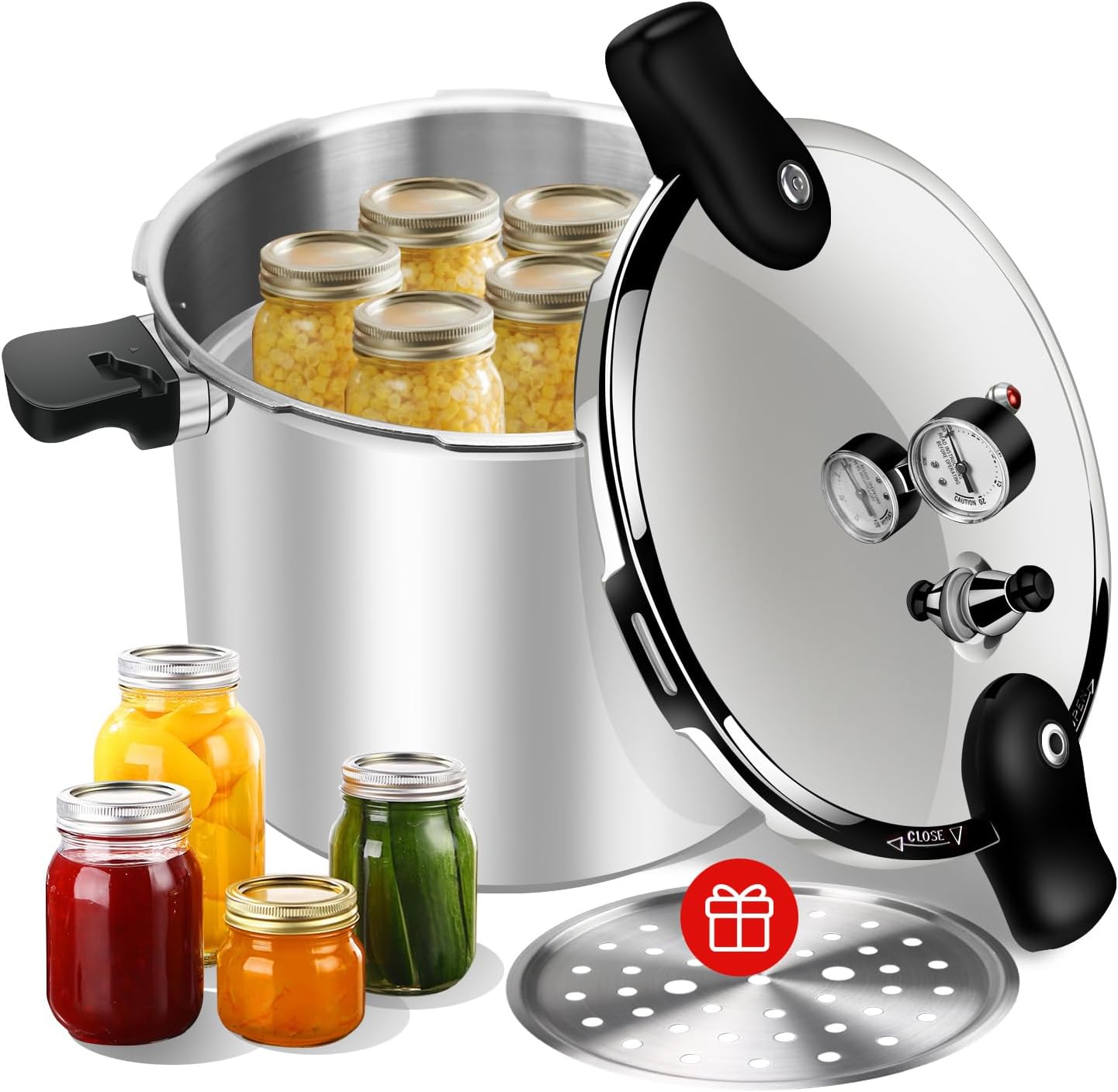
The MENTENSIL 23-25qt pressure canner is purpose-built for serious home food preservation. This industrial-capacity canner targets experienced canners, homesteaders, farmers, and families committed to bulk food storage. Its 24-26 quart capacity sets it apart from typical household pressure cookers, enabling users to process 7 standard quart jars or 20-25 pint jars simultaneously.
Performance is where this canner truly excels. The 10-15PSI pressure range with precise regulation handles both standard and high-altitude canning requirements. Real-world results show 70%+ time savings on braised meats and legumes, transforming a 2-hour beef brisket into a 40-minute meal. The thickened composite bottom distributes heat evenly across all stove types, from gas and induction to electric ceramic surfaces, eliminating the need for adapter plates or specialized equipment.
Build quality reflects its premium positioning. Triple safety certifications (FDA food contact, UL/ETL electrical) combined with a pressure regulator, anti-clogging safety valve, and self-locking lid create multiple layers of protection. The composite bottom resists warping even after years of intensive use, and the detachable sealing ring simplifies maintenance and replacement. Heat-resistant extended handles and a large, easy-to-read dial gauge make operation accessible to beginners.
The main considerations are size and learning investment. This canner demands significant counter and storage space, making it impractical for apartments or small kitchens. Proper canning technique requires education, especially regarding pressure regulation and jar processing times. The premium price reflects industrial-grade construction rather than mass-market convenience.
For serious canners, homesteaders, and batch cooking enthusiasts, the MENTENSIL delivers exceptional value through durability, capacity, and safety. It's a long-term investment that pays dividends through years of efficient food preservation and cooking performance.
Capacity: 23-25 liters (approximately 24-26 quarts)
Jar Capacity: 7 standard quart jars in single layer or 20-25 pint jars in 2 layers
Pressure Range: 10-15 PSI with adjustable regulator
Stove Compatibility: Gas, induction, electric, ceramic, and all other stove types
Bottom Construction: Thickened composite material for even heat distribution
Safety Features: Pressure regulator, anti-clogging safety valve, self-locking lid device
Certifications: FDA food contact safety, UL/ETL electrical safety
Handle Design: Heat-resistant extended handles for safe grip
Gauge: Large dial pressure gauge for easy reading
Maintenance: Detachable sealing ring for convenient replacement and cleaning
Ideal For: Experienced canners and homesteaders who process large quantities of preserves, jams, pickles, and pressure-canned vegetables. Farmers and small-scale food producers seeking efficient batch processing. Families committed to long-term food storage and self-sufficiency. Serious home cooks who want to reduce cooking times for tough cuts of meat and dried legumes.
Not Ideal For: Apartment dwellers with limited storage space. Complete beginners to pressure cooking without access to proper training resources. Those seeking a compact, portable pressure cooker for occasional use. Budget-conscious shoppers unwilling to invest in premium construction.

Pros
- Exceptional 22-quart capacity allows processing large batches of seasonal produce efficiently
- Three pressure settings provide flexibility for different food types and preservation methods
- Comprehensive beginner package includes racks, canning guide, and clear safety instructions
- Affordable price point compared to competitor models with similar capacity
- Strong customer satisfaction with consistent 4.4-star rating from thousands of users
Cons
- Aluminum construction is not dishwasher safe, requiring manual cleaning after each use
- Limited to gas and electric coil stovetops only, not compatible with induction cookers
- Heavier weight and larger footprint may require dedicated storage space in smaller kitchens
The T-fal 22-Quart Pressure Canner is a comprehensive home canning solution designed for serious food preservation enthusiasts and beginning canners alike. With its impressive 22-quart capacity, this aluminum canner enables you to process large batches of seasonal produce, meats, vegetables, seafood, and fruits in a single session. Whether you're preserving your garden harvest or preparing family-sized meals for long-term storage, this canner delivers the capacity and functionality needed for efficient batch processing.
What sets this pressure canner apart is its versatile dual-purpose design and three adjustable pressure settings (5 PSI, 10 PSI, and 15 PSI). This flexibility allows you to safely preserve low-acid foods like meats and vegetables using USDA-approved pressure canning methods, while also supporting water-bath canning for high-acid recipes such as jams, pickles, and fruits. The beginner-friendly steam release valve and easy-to-read pressure gauge provide clear visual feedback, making safe operation accessible even to first-time canners. Included canning racks and a comprehensive step-by-step guide remove guesswork from the process.
The durable polished aluminum construction delivers even heat distribution across the bottom, ensuring consistent pressure maintenance throughout the canning cycle. The sturdy long handles provide secure, comfortable grip during operation, while the secure locking lid mechanism prevents accidental opening. At this price point, the value proposition is strong, offering features typically found in more expensive models. The aluminum material does require hand washing, which is a minor trade-off for the reliable performance and heat conductivity it provides.
One consideration is that this canner works exclusively with gas and electric coil stovetops, making it incompatible with modern induction cooktops. Additionally, the 22-quart size demands adequate kitchen storage space. These limitations are worth noting, though they don't diminish the product's core functionality for traditional canning setups.
The T-fal 22-Quart Pressure Canner represents an excellent investment for home food preservation. With its large capacity, multiple pressure settings, proven safety features, and included accessories, it delivers professional-grade canning capability at an accessible price. Backed by strong customer reviews and a one-year warranty, this canner is recommended for anyone serious about home food preservation.
This pressure canner accommodates a wide range of jar sizes to maximize each canning session. The 22-quart capacity holds up to 24 half-pint jars, 18 pint jars, 16 wide-mouth pint jars, or 7 quart jars per batch. This flexibility allows you to match jar sizes to your specific preservation needs, whether you're canning small portions for individual servings or larger quantities for family meals.
The included two canning racks ensure jars are properly elevated and separated during processing, allowing steam and heat to circulate evenly around each jar. Proper rack placement is essential for uniform preservation and food safety. The racks are durable and designed to support the weight of multiple full jars without warping or shifting during the pressurization process.
Safety is paramount in pressure canning, and the T-fal 22-Quart model includes multiple safety features designed for reliable operation. The secure locking lid prevents accidental opening during pressurization, while the pressure-indicator pin provides visual confirmation of internal pressure levels. The steam release valve is engineered for easy operation without requiring excessive force, making it suitable for canners of all ages and abilities.
The easy-to-read pressure gauge displays PSI clearly, allowing you to monitor and maintain precise pressure settings throughout the canning cycle. This visibility is crucial for USDA-approved processing, as specific pressure levels are required for different food types and altitudes. The design prioritizes user confidence, making the learning curve manageable for beginners while maintaining the functionality required by experienced canners.
Buying Guide: What to Consider When Choosing a Pressure Cooker for Canning
Capacity and Jar Size Compatibility
Capacity is the first decision point for any canning setup. Larger canners process more jars per batch, saving you time during peak harvest season. A 12-quart model typically holds 7 pint jars or 4 quart jars, while 22 to 24-quart canners can process 16 to 20 pint jars in a single cycle.
Consider your typical canning volume and available storage space. If you preserve small batches a few times per year, a 4-quart or 12-quart model works well. For serious home preservers or families planning to can large quantities, investing in a 22 to 25-quart canner reduces the number of batches and lets you preserve more efficiently.
Material Quality and Heat Distribution
Aluminum and stainless steel are the two primary materials for pressure canners. Aluminum conducts heat quickly and evenly, making it ideal for rapid heating and consistent cooking. Stainless steel offers superior durability and resists corrosion, though it may require slightly longer heating times.
Premium aluminum-manganese-titanium alloys provide the best balance of fast heat transfer and long-term durability. Look for models with thick, composite pot bottoms that distribute heat evenly across the cooking surface, preventing hot spots that could damage your jars or cook food unevenly. Even heat distribution is especially important when canning multiple jars simultaneously.
Safety Features and Pressure Control
A reliable pressure canner must have multiple safety mechanisms to prevent accidents. Essential features include a pressure regulator that maintains consistent pressure, a pressure gauge (dial or weighted) for accurate monitoring, and an emergency release valve that automatically vents excess pressure if limits are exceeded.
Look for models with a self-locking lid system that prevents opening until pressure has safely decreased. Anti-blocking safety valves prevent steam vents from clogging, and a secure locking mechanism ensures the lid stays sealed throughout the canning process. Triple-certified models that have passed FDA food contact safety and UL/ETL electrical safety certifications provide extra peace of mind, especially if you’re new to canning.
Stovetop Compatibility and Ease of Use
Your pressure canner needs to work reliably on your existing stove. Universal models work on gas, electric coil, ceramic, and induction cooktops, giving you flexibility if you ever upgrade your kitchen. Check that your model explicitly supports induction if you have an induction cooktop, as not all aluminum canners are induction-compatible.
User-friendly design matters during long canning sessions. Heat-resistant handles, large easy-to-read pressure gauges, and detachable sealing rings for simple cleaning all reduce frustration. Many modern canners include helpful extras like canning racks to safely stack jars, step-by-step canning guides, and ergonomic lids that are easier to lock and unlock than older designs. If you’re browsing quality cookware options, similar principles of durability and usability apply across your entire kitchen.
Final Thoughts
Successful home canning starts with equipment engineered for safety and efficiency. The T-fal 22-Quart Aluminum Pressure Canner offers exceptional capacity and reliable performance for serious preservers, while the Peterboo 4 Quart Induction Compatible Pressure Cooker serves smaller households or those just beginning their canning journey. Whichever model matches your needs, prioritize verified safety features, even heat distribution, and sturdy construction to ensure your preserved foods stay safe and delicious for months to come.
Frequently Asked Questions
Can I use a regular pressure cooker for canning? Most standard pressure cookers lack the safety certifications and pressure stability required for safe pressure canning. Dedicated pressure canners are engineered to maintain consistent pressure and include multiple safety valves specifically designed for the longer processing times canning requires. Using the right equipment protects your family from foodborne illness.
What’s the difference between pressure canning and water bath canning? Water bath canning uses boiling water to safely preserve high-acid foods like fruits, jams, and pickles. Pressure canning heats contents to 240 degrees Fahrenheit, which is necessary for low-acid foods like vegetables, meats, and seafood where botulism risk exists. Most quality pressure canners support both methods, giving you versatility in what you can preserve.
How long does a pressure canner last? A well-maintained pressure canner typically lasts 10 to 20 years or longer. Proper care includes regular cleaning of the sealing ring, checking the pressure gauge for accuracy annually, and replacing worn components like the gasket when needed. Many manufacturers offer replacement parts and warranties, making repairs affordable if issues arise during your canning seasons.
Is canning equipment expensive to maintain in 2026? Pressure canners are among the most durable kitchen tools you can own. Beyond the initial investment, maintenance costs are minimal. Replacement sealing rings cost just a few dollars, and most canners require only basic cleaning between uses. When you calculate the cost per jar of preserved food over years of use, a quality canner becomes one of your kitchen’s best long-term values. For more insights on kitchen equipment investments, explore our cookware category.


