

You’re standing in your kitchen at 6 a.m., ready to bake fresh bread for your family, but the thought of hand-kneading dough makes your arms ache before you even start. A quality stand mixer eliminates this frustration, transforming laborious mixing tasks into effortless, hands-free preparation. This guide reviews five of the best kitchen mixers available today, each designed to handle everything from delicate meringues to heavy pizza doughs.
Whether you’re a casual home baker or someone who bakes multiple times per week, finding the right mixer depends on your capacity needs, motor power, and budget. We’ve evaluated leading brands including KitchenAid, Cuisinart, VIVOHOME, ZACME, and CEBORY to help you make an informed decision. Our review focuses on real-world performance, durability, and versatility across different baking and cooking scenarios.
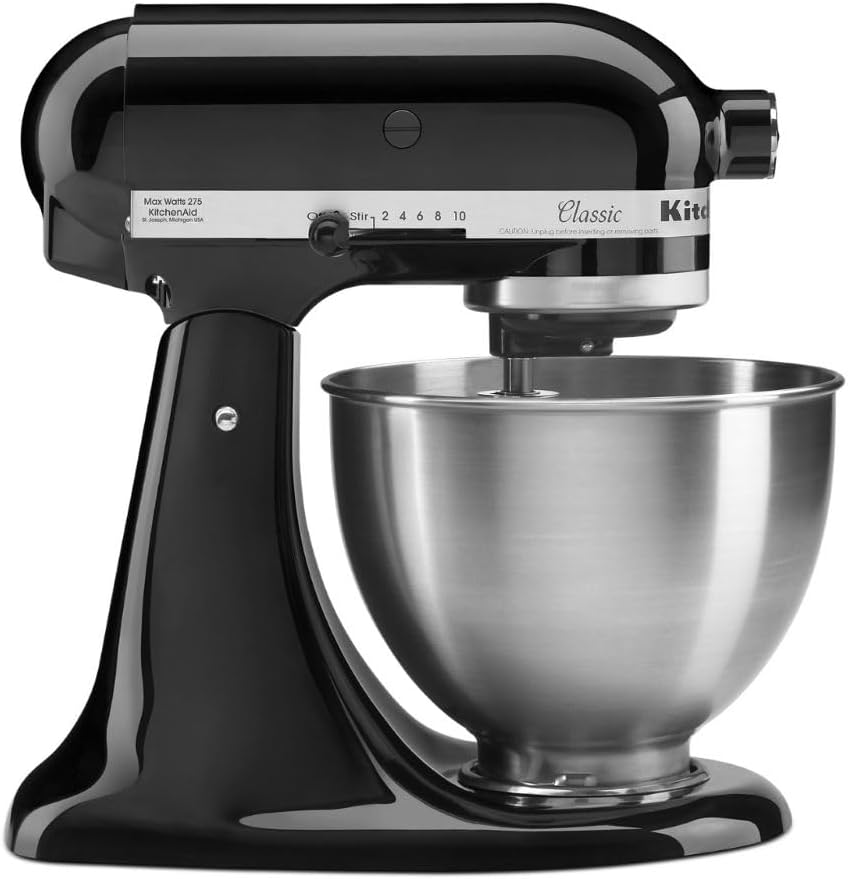
Pros
- Excellent mixing performance with 59 touchpoints per rotation for even ingredient distribution
- Perfect capacity for standard household recipes without taking up excessive counter space
- Tilt-head mechanism allows easy bowl access and ingredient addition during mixing
- Expandable with power hub attachments for pasta makers, food grinders, and other accessories
- Highly rated by thousands of users with strong reliability and longevity reports
Cons
- 4.5-quart capacity may be limiting for large-batch baking or commercial use
- Does not include pouring shield, which some competing models offer as standard
- Optional attachments sold separately, adding to total cost of ownership
The KitchenAid Classic Series K45SS is a mid-range stand mixer designed for home bakers and cooking enthusiasts who want reliable performance without the investment of larger professional models. With its 4.5-quart stainless steel bowl and 10-speed motor, it handles standard household recipes with ease, from mixing cookie dough to kneading bread and whipping cream.
The standout feature is the 59-point planetary mixing action, which means the beater, dough hook, or whip makes contact with the bowl at 59 different points per rotation. This ensures thorough ingredient incorporation and eliminates dead zones where unmixed ingredients can hide. Combined with the tilt-head design, you can easily add ingredients mid-mix without stopping the motor, making the workflow smooth and intuitive.
Build quality is solid throughout. The motor is powerful enough for demanding tasks, and the durable metal construction feels substantial without being overly heavy at 22 pounds. The included flat beater, dough hook, and 6-wire whip are coated for durability and dishwasher-safe for convenience. The stainless steel bowl is also dishwasher-safe and has a brushed finish that resists fingerprints.
The power hub is a major advantage, allowing you to expand functionality with optional attachments like pasta makers, food grinders, and vegetable slicers. However, these attachments are sold separately, which increases the total investment if you want full versatility. The 4.5-quart capacity may feel limiting if you frequently bake large batches, though it handles up to 8 dozen cookies in a single batch, which covers most home baking needs.
Overall, the K45SS delivers excellent value for home bakers seeking a dependable mixer with proven longevity and strong user satisfaction. It strikes a balance between affordability, performance, and expandability that appeals to serious home cooks.
Model: K45SS
Bowl Capacity: 4.5 quarts (stainless steel, brushed finish)
Motor Speeds: 10 variable speeds
Mixing Action: 59-point planetary mixing with beater, dough hook, and 6-wire whip
Head Design: Tilt-head with locking mechanism
Power Hub: Yes, compatible with 15+ optional attachments
Dimensions: 13.9 inches H x 8.7 inches W x 14.1 inches D
Weight: 22 pounds
Color: Onyx Black (also available in White)
Included Accessories: Coated flat beater, coated dough hook, 6-wire whip, 4.5-quart stainless steel bowl
Care: Bowl and beaters are dishwasher-safe
Who Should Buy This Mixer? The K45SS is ideal for home bakers and cooking enthusiasts who regularly prepare doughs, batters, and whipped items. It works well for households that bake 1-2 times per week and want a reliable, expandable machine without premium pricing.
Capacity Considerations: The 4.5-quart bowl handles most home recipes comfortably. It mixes dough for 3 loaves of bread, 8 dozen cookies, or 6 pounds of mashed potatoes per batch. If you frequently prepare large batches or cook for commercial purposes, consider the 5-quart or 7-quart models instead.
Attachment Expansion: The power hub opens up significant functionality through optional attachments like pasta rollers, food grinders, and vegetable slicers. Budget extra funds if you plan to build a collection of these accessories, as they are sold separately.
Space and Placement: At 22 pounds and 13.9 inches tall, this mixer requires dedicated counter space or cabinet storage. Measure your space before purchasing to ensure it fits your kitchen layout comfortably.
Alternatives to Consider: The Artisan Mini (3.5 quarts) is smaller and more affordable for light baking. The Artisan Design Series (5 quarts) offers larger capacity and additional color options at a higher price point. The Professional 7-quart model serves serious bakers and small commercial operations.
Buying Guide for Stand Mixers
Bowl Capacity and Motor Power
The size of your mixing bowl directly impacts how much you can prepare in a single batch. A 4.5-quart bowl suits individuals and couples baking occasionally, while 5.5 to 6-quart capacities serve families and frequent bakers. Motor wattage matters equally: 500-watt motors handle standard recipes reliably, but 660-watt and 800-watt motors provide the sustained power needed for heavy doughs and large batches without strain.
Consider your typical baking volume before purchasing. If you’re mixing three loaves of bread weekly or preparing multiple cake batters for gatherings, a larger capacity with robust motor power saves time and prevents overworking your equipment. Conversely, compact kitchens with limited storage may benefit from mid-sized models that balance capability with footprint.
Speed Settings and Mixing Attachments
More speed options provide finer control over your mixing process. Models with 10 to 12 speeds let you start gently when combining dry ingredients and gradually increase to vigorous kneading speeds. Essential attachments include a flat beater for general mixing, a dough hook for bread and pizza doughs, and a wire whip for whipping cream and egg whites. Some premium models include splash guards with pour spouts, allowing you to add ingredients safely without stopping the mixer.
Check whether your chosen mixer accepts optional attachments like pasta makers, meat grinders, or vegetable spiralizers if you want expanded functionality beyond basic mixing. This expandability extends the mixer’s usefulness throughout your kitchen for years to come. We recommend prioritizing models that include a splash guard, as this feature significantly improves your baking experience by preventing ingredient splatter.
Design Features and Durability
Tilt-head designs offer superior accessibility compared to bowl-lift models, letting you reach the bowl easily without lifting heavy equipment. Die-cast metal construction and stainless steel bowls resist corrosion and withstand years of regular use. Noise levels matter too, especially if you bake early or late in the day; look for models emphasizing quiet operation through advanced motor design and sound-dampening features.
Suction-cup bases keep your mixer stable during vigorous mixing cycles, preventing unwanted movement across your countertop. Dishwasher-safe bowls and attachments simplify cleanup after baking sessions. Visit our cookware category for additional kitchen equipment recommendations that complement your stand mixer setup. A quality mixer backed by a multi-year warranty provides confidence in your investment and reliable customer support if issues arise.
Noise Level and Heat Management
Commercial-grade mixers often operate at lower noise levels through advanced motor engineering and strategic gear design. If you share living space with others or prefer a quieter kitchen environment, prioritize models rated at 48 decibels on lower speeds and 68 decibels on maximum settings. Efficient heat dissipation through copper motors and ventilation design prevents overheating during extended mixing sessions, extending your mixer’s lifespan significantly.
Models designed for bulk baking and commercial applications often feature superior noise reduction and thermal management compared to basic home models. Consider your baking frequency and household noise tolerance when evaluating this factor. Check out our guide on induction cookware sets for other kitchen tools that complement your mixer investment.
Final Thoughts
The KitchenAid Classic Series 4.5 Quart Tilt-Head Stand Mixer remains an excellent choice for traditional home bakers seeking proven reliability and extensive attachment compatibility, while the ZACME 8.4QT Commercial Stand Mixer delivers unmatched capacity and power for serious bakers and small commercial operations. Your ideal mixer depends on your baking volume, available counter space, and budget, but any of these five models will transform your kitchen routine and produce consistently superior results compared to hand mixing.
Frequently Asked Questions
What size stand mixer do I need for a family of four?
A 5.5 to 6-quart mixer handles typical family baking needs comfortably, allowing you to prepare multiple batches of cookies, cakes, or bread doughs in a single session. This capacity accommodates up to three loaves of bread or two pounds of flour without overfilling the bowl. For families that bake frequently or entertain regularly, this size provides versatility without excessive counter space requirements.
Can I use a stand mixer for tasks beyond baking?
Yes, quality stand mixers excel at whipping cream, preparing mashed potatoes, mixing cake batters, and even grinding meat or making fresh pasta when equipped with optional attachments. The planetary mixing action ensures thorough incorporation of ingredients for soups, dressings, and other non-baking applications. Many models accept specialized attachments that expand functionality far beyond basic mixing, making your mixer a versatile kitchen workhorse. For additional kitchen preparation tools, explore our measuring cups and spoons sets.
How do I maintain my stand mixer for longevity?
Clean your bowl and attachments immediately after each use, preferably in the dishwasher if the manufacturer approves. Wipe the motor housing regularly to prevent dust accumulation. Allow adequate cooling time between extended mixing sessions, especially when processing heavy doughs. Store attachments in a designated location to prevent loss or damage, and consult your manual for specific maintenance recommendations. Most quality mixers with proper care last fifteen to twenty years or longer.
What’s the difference between commercial and home stand mixers?
Commercial mixers feature larger capacities, more powerful motors, advanced noise reduction, and reinforced construction designed for daily heavy use in professional settings. Home mixers prioritize efficiency for typical household baking volumes and often cost significantly less. However, commercial-grade models work exceptionally well in homes with serious bakers who prepare large quantities regularly. In 2026, many commercial mixers meet NSF standards for food safety while remaining accessible to home cooks seeking professional-level performance.


