You’ve just finished prepping a beautiful meal, but your cutting board is stained, scratched, and smells like last night’s garlic. It’s a common kitchen frustration, and the right board can make all the difference. This guide covers the best cutting board options for 2026, from classic bamboo to modern titanium, helping you choose based on your cooking habits and maintenance preferences.
Whether you’re a home cook who chops daily or an occasional entertainer, we’ve reviewed nine top-rated boards to simplify your decision. Let’s dive into the details and find the perfect surface for your kitchen. For more specific guidance, check out our guide on cutting boards for raw meat.





Buying Guide: How to Choose the Best Cutting Board
Selecting the right cutting board involves more than just picking a pretty surface. Consider these key factors to ensure your board meets your daily needs and lasts for years.
Material Matters: Wood, Bamboo, or Metal?
Wooden and bamboo boards, like the Allsum Extra Thick Wood Cutting Board for Kitchen, are gentle on knife edges and naturally antimicrobial. They’re ideal for most tasks but require hand washing and occasional oiling to prevent warping.
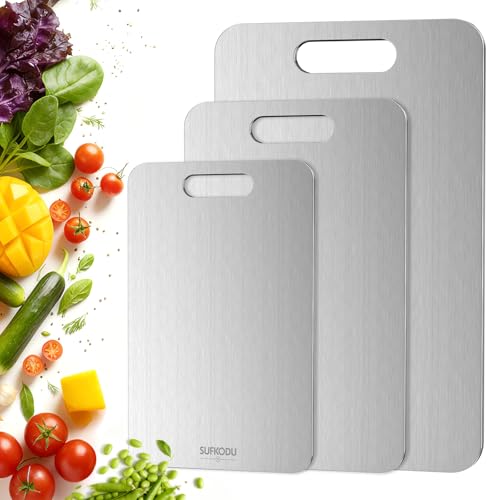
Metal boards, including titanium and stainless steel, are non-porous, dishwasher-safe, and resistant to odors and stains. They’re perfect for raw meat and high-volume cooking, but they can dull knives faster. If you use an electric knife, check our best cutting board for electric knife recommendations.
Size and Thickness: Match Your Workspace
Consider your counter space and typical prep tasks. A large board (15×10 inches or bigger) is great for carving roasts, while a set with multiple sizes offers versatility. Thicker boards (1 inch or more) provide stability and absorb impact better than thin mats.
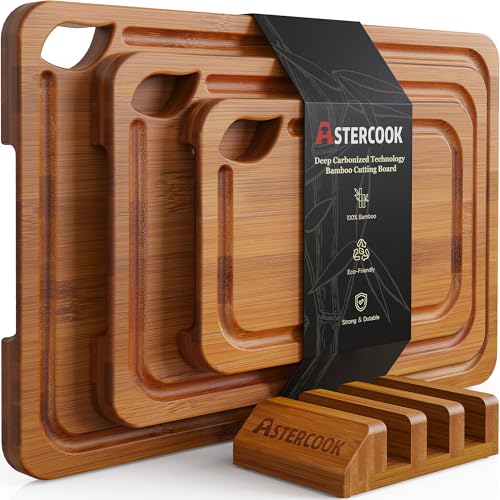
If you’re short on storage, look for sets with stands, like the Astercook Deep-Carbonized Bamboo Cutting Boards, which keep boards upright and organized.
Maintenance and Durability
Think about how much time you want to spend cleaning. Bamboo and wood require hand washing and periodic conditioning. Metal boards are dishwasher-safe, making cleanup a breeze. If you prioritize low maintenance, a titanium or stainless steel board is a smart choice.
For long-term durability, look for boards that resist warping, cracking, and water absorption. Carbonized bamboo, as seen in the ROYAL CRAFT WOOD Wooden Cutting Boards for Kitchen, offers extra moisture resistance.
Extra Features: Juice Grooves and Handles
Juice grooves catch liquids from meat and fruit, keeping your countertop clean. Handles make it easy to move the board from counter to table or sink. Some boards feature double-sided designs with a groove on one side and a smooth surface for serving.
These small additions can greatly enhance your cooking experience. For more tips on knife care, see our guide to chef knife lengths and best knife sharpeners.
Final Thoughts
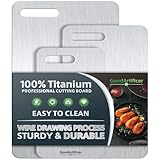
Choosing the best cutting board ultimately comes down to your personal cooking style and maintenance preferences. For a versatile, eco-friendly option that’s gentle on knives, the Allsum Extra Thick Wood Cutting Board for Kitchen is a fantastic choice, offering durability and a beautiful bamboo surface. If you prefer a modern, low-maintenance board that’s perfect for raw meat and easy cleaning, the Titanium Cutting Board for Kitchen from GoodArtificer is a top contender, combining non-porous hygiene with dishwasher convenience.
Frequently Asked Questions
What is the best material for a cutting board?
The best material depends on your needs. Wood and bamboo are gentle on knives and naturally antimicrobial, while metal boards are non-porous and dishwasher-safe. For most home cooks, a high-quality bamboo board offers a great balance of durability and knife-friendliness.
How do I clean and maintain a wooden cutting board?
Hand wash wooden boards with mild soap and warm water, then dry immediately. Avoid soaking them, and apply food-grade mineral oil monthly to prevent drying and cracking. For more tips, check our kitchen gift ideas for mom, which include care accessories.
Are titanium cutting boards worth it?
Titanium boards are worth it if you value hygiene and easy cleanup. They are non-porous, resist odors and stains, and are dishwasher-safe. However, they can dull knives faster than wood, so consider your knife quality and sharpening routine.
Can I use a metal cutting board with a chef’s knife?
Yes, you can, but metal surfaces are harder than wood and may dull blades more quickly. If you use a metal board, ensure your knife is sharp and use a honing rod regularly. For more on knife maintenance, see our guide to spatulas for stainless steel pans.