

Imagine trying to flip a delicate omelet only to have it stick and tear, leaving a mess behind. That frustration is all too common with subpar cookware. This guide cuts through the noise to help you find a nonstick skillet that delivers flawless results every time, whether you’re a beginner or a seasoned cook.
We’ve reviewed the market’s most promising options, focusing on nonstick performance, safety, and durability. Our goal is to match you with a pan that suits your cooking style and stovetop, so you can enjoy stress-free cooking and easy cleanup. For more cookware insights, check out our cookware collection.


Buying Guide
Nonstick Coating Safety
When choosing a nonstick skillet, the coating’s safety is paramount. Look for pans that are free from harmful chemicals like PFOA, PFOS, lead, and cadmium. Many modern options use ceramic or granite-infused coatings that are both safe and effective.
For example, the SENSARTE model boasts a Switzerland ILAG nonstick surface that is free from toxic materials, ensuring your food stays healthy. Similarly, the Cuisinart ceramic skillet is PFAS-free, giving you peace of mind with every meal.
Heat Distribution and Induction Compatibility
A great skillet heats evenly to prevent hot spots that cause burning or uneven cooking. Heavy-duty aluminum or hard-anodized bases are excellent conductors, while some models feature induction-ready bases for versatility.
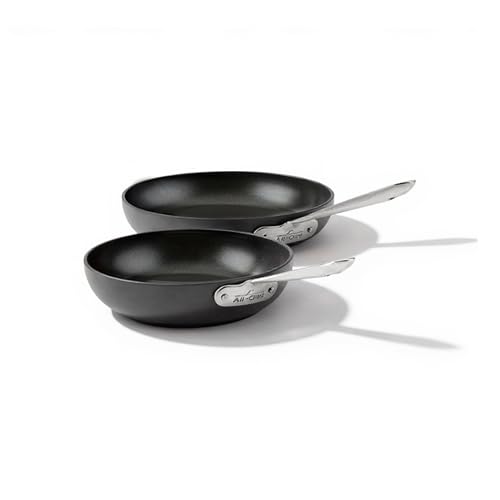
If you have an induction cooktop, ensure the skillet is compatible. The SENSARTE and All-Clad HA1 sets are induction-ready, making them ideal for modern kitchens. For more on induction-friendly options, see our stainless steel frying pan guide.
Durability and Maintenance
Nonstick surfaces can wear out over time, so durability is key. Hard-anodized aluminum and scratch-resistant coatings extend the pan’s life. Always use silicone, nylon, or wooden utensils to avoid scratching.
Maintenance is simple: most nonstick pans are easy to clean with a soft sponge, but hand washing is recommended to preserve the coating. The CAROTE skillet’s granite coating is designed for effortless wiping, and the All-Clad set is dishwasher safe, though hand washing is better for longevity.
Handle Comfort and Oven Safety
A comfortable, heat-resistant handle is essential for safe handling. Look for riveted handles that stay cool on the stovetop, and check if the pan is oven-safe for versatile cooking.
The Cuisinart’s solid stainless steel riveted handle stays cool, while the SENSARTE’s bakelite handle features a woodgrain design for a comfortable grip. Oven safety varies: the All-Clad is oven safe up to 500°F, and the Cuisinart up to 500°F as well, giving you flexibility for finishing dishes in the oven.
Final Thoughts
Finding the perfect nonstick skillet depends on your specific needs. For a versatile, induction-compatible option with a healthy coating, the SENSARTE Nonstick Frying Pan Skillet with Lid is an excellent all-rounder. If you prefer a compact, budget-friendly choice for everyday tasks, the Cuisinart Chef’s Classic 8-Inch Ceramic Open skillet delivers reliable performance. Both are top contenders in their categories, so you can cook with confidence.
Frequently Asked Questions
What is the safest nonstick skillet?
The safest nonstick skillets are those free from PFOA, PFOS, lead, and cadmium. Look for ceramic or granite coatings, like the SENSARTE’s ILAG surface, which are non-toxic and safe for everyday cooking. Always check the product specifications to confirm safety certifications.
Can I use metal utensils on a nonstick skillet?
It’s best to avoid metal utensils as they can scratch the nonstick coating. Use silicone, nylon, or wooden utensils to preserve the surface. Many manufacturers recommend hand washing and gentle cleaning to extend the pan’s life.
Are nonstick skillets induction compatible?
Not all nonstick skillets work on induction cooktops. Look for models with a magnetic stainless steel base, such as the SENSARTE or All-Clad HA1, which are induction-ready. For more induction-friendly options, explore our cast iron frying pan guide.
How long does a nonstick skillet last?
With proper care, a quality nonstick skillet can last several years. Avoid high heat, use gentle utensils, and hand wash to prevent coating deterioration. Replacing the pan when the coating starts to peel or stick is recommended for safety and performance.


