You have a delicate piece of salmon in the pan, perfectly seared on one side. The moment of truth arrives: flipping it without breaking. A flimsy spatula will tear the skin, and a thick one will crush the flesh. This is exactly why a purpose-built fish spatula matters. In this guide, we review the best fish spatula options for 2026, from ultra-thin stainless steel models to nonstick-safe nylon designs. Whether you are a home cook or a weekend griller, these tools make flipping fish, eggs, and even pancakes effortless and precise. For more on kitchen essentials, check out our guide to the best spatula for every kitchen task.

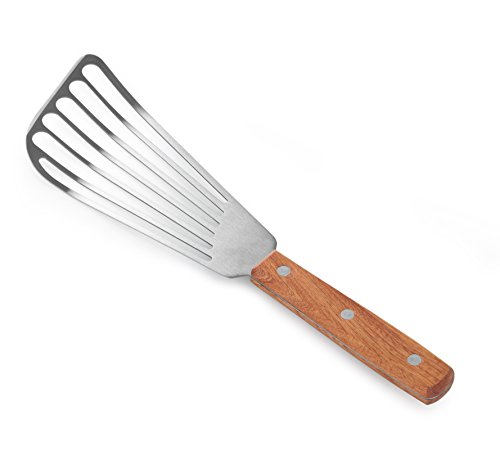

![MIU Fish Spatula Stainless Steel, Flexible, Polished Metal, Corrosion Resistant, Kitchen Slotted Turner [Upgraded Version]](https://m.media-amazon.com/images/I/31Qq7okqLmL._SL500_.jpg "MIU Fish Spatula Stainless Steel, Flexible, Polished Metal, Corrosion Resistant, Kitchen Slotted Turner [Upgraded Version]")
Buying Guide
Blade Material and Flexibility
The blade is the heart of any fish spatula. Stainless steel offers durability and heat resistance, but flexibility is key for sliding under delicate fillets. Thinner blades, like those on the Gourmet Easy Fish Spatula Set, excel at turning fragile foods. If you use nonstick cookware, nylon or silicone-coated blades prevent scratching while still providing enough bend. Look for 304 stainless steel or LFGB-certified nylon for safe, long-lasting use.
Handle Comfort and Grip
A wet fish spatula can slip, so handle design matters. Ergonomic non-slip grips, like those on the JXWING 304 Stainless Steel Fish Spatula, provide control during delicate maneuvers. Wooden handles offer a classic feel and stay cool, while polypropylene or nylon handles are dishwasher safe and resist heat. Choose a handle that feels balanced in your hand and fits your cooking style.
Slotted vs. Solid Blade
Most fish spatulas have slots to drain excess oil and juices, which helps keep food crispy and reduces splatter. Slotted designs also reduce contact area, making it easier to slide under food. For flipping eggs or pancakes, a solid blade might be preferable, but slots are rarely a disadvantage. Many top picks, including the MIU Fish Spatula Stainless Steel, combine a thin edge with a slotted surface for maximum versatility.
For more on choosing the right turner, read our best silicone spatula, or see our top cooking utensil sets for complete kitchen solutions.
Final Thoughts
After comparing material, flexibility, and comfort across the market, our top recommendation is the Gourmet Easy Fish Spatula Set for its ultra-thin stainless steel edge and two-size versatility, while the KSENDALO Thin Flexible Fish Spatula for Nonstick is the best value for nonstick cookware users who need a gentle, flexible blade. Whichever you choose, a quality fish spatula will transform your cooking experience and save many a fillet from falling apart.
Frequently Asked Questions
What makes a fish spatula different from a regular spatula?
A fish spatula features a thinner, more flexible blade and long slots that let oil drain. This design allows it to slide under delicate foods without breaking them, whereas a standard spatula is thicker and less precise.
Can I use a stainless steel fish spatula on nonstick pans?
You can, but only if the blade is very thin and flexible like the New Star Foodservice Wood Handle Fish Spatula. However, for nonstick cookware, a nylon or silicone-coated spatula is safer to prevent scratching. Always check the manufacturer’s recommendation for your pans.
How do I clean a fish spatula?
Most stainless steel and nylon fish spatulas are dishwasher safe. For wooden handles, hand wash is recommended to prevent cracking. Rinse immediately after use to keep the slots free of food residue. If stubborn bits stick, a quick soak in warm soapy water helps.
What size fish spatula should I buy?
A blade length between 6 and 7 inches is ideal for standard pans and most fillets. If you cook large whole fish or grill, a wider blade (around 7.5 inches) offers more support. Sets like the Gourmet Easy Fish Spatula Set include both a large and small turner for versatility. For more tips, see our non-toxic kitchen utensils guide.