

Imagine stepping into your kitchen and seeing a beautiful farmhouse sink that instantly elevates your entire space. Whether you’re planning a full kitchen remodel or simply want to refresh your current setup, choosing the right farmhouse sink can make all the difference in both functionality and aesthetic appeal. This guide walks you through the top 10 farmhouse sinks available today, helping you understand the key differences between styles, materials, and features so you can confidently select the one that matches your vision.
Farmhouse sinks have become a cornerstone of modern kitchen design, blending rustic charm with practical performance. From traditional fireclay models that develop character over time to sleek stainless steel options built for heavy-duty work, the variety available can feel overwhelming. We’ve researched and compared the leading options to bring you a curated selection that covers different budgets, installation types, and design preferences.
If you’re exploring kitchen upgrades, you might also want to check out our cookware guide to ensure your new sink pairs well with quality pots and pans.
Pros
- Beautiful glossy white finish complements various kitchen styles
- Included workstation accessories add significant functionality and value
- Fireclay material is exceptionally durable and easy to clean
- Deep single bowl offers generous space for large cookware
- Positive customer feedback highlights ease of installation and stunning appearance
Cons
- Weighs 99 pounds, requiring sturdy cabinet support and possibly extra help during installation
- Apron front design may need precise cabinet measurements and professional installation for proper fit
- Some users may prefer a deeper basin for taller items, though the 10-inch depth is standard for farmhouse sinks
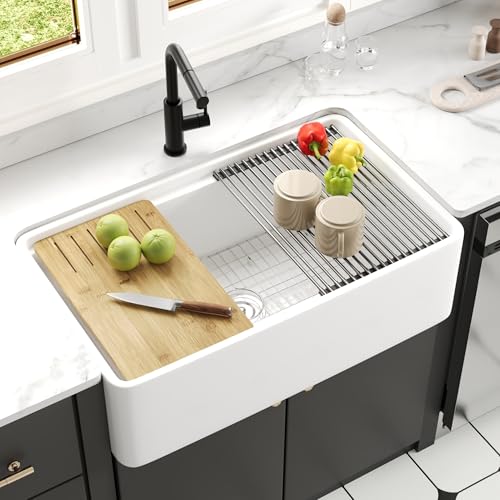
The DeerValley 33-inch white fireclay apron front sink is a standout choice for homeowners who want the classic farmhouse look without sacrificing modern functionality. Designed as a workstation sink, it includes a cutting board, roll-up drying rack, and bottom grid to turn the basin into a complete food prep and cleanup zone. This sink is ideal for busy families, avid cooks, or anyone renovating a kitchen with a farmhouse or transitional style.
Its standout feature is the integrated workstation system: one-piece sill supports allow the included accessories to slide back and forth, so you can chop vegetables or dry dishes directly over the sink. The extra-large 33x20x10 inch single bowl easily handles large pots, baking sheets, and full dinner sets. Real-world performance is excellent, with the sloped bottom ensuring quick, complete drainage and the deep basin minimizing splashes.
The fireclay construction is both beautiful and tough. Fired at high temperatures, it resists scratches, stains, and heat, while the high-gloss glaze wipes clean with a damp cloth. The sink is heavy at 99 pounds, which adds a sense of solidity and quality. The glossy white finish brightens the kitchen and pairs well with both modern and traditional cabinetry.
Potential drawbacks include the sink's weight, which may require two people to lift and a reinforced cabinet base. The apron front design also demands precise cabinet measurements and possibly professional installation. Some users might wish for an even deeper basin, but the 10-inch depth is standard and works well for most tasks.
Overall, the DeerValley farmhouse sink delivers exceptional value with its combination of premium fireclay, thoughtful workstation accessories, and attractive design. Backed by strong customer reviews, it is a reliable upgrade that enhances both the look and functionality of any kitchen. If you are looking for a durable, stylish, and practical sink, this model is well worth considering.
Brand: DeerValley
Model Number: DV-1K0067
Material: Fireclay
Color: Pearl White
External Dimensions: 32.87" W x 20" D x 10" H
Internal Dimensions: 31.3" W x 17.24" D x 9.13" H
Drain Size: 3.5 inches
Weight: 99 pounds
Installation Type: Apron Front (drop-in/undermount compatible)
Included Accessories: Cutting board, roll-up rack, bottom grid (2), basket strainer (2)
Minimum Base Cabinet Width: 35.24 inches

Pros
- Solid copper construction ensures lasting durability and a unique patina that improves with use
- Large 32-inch single bowl provides ample workspace for big prep jobs and large cookware
- 3D-animated installation instructions simplify the installation process for DIYers
- Built-in sound dampening pads keep the sink quiet during use
- Naturally antimicrobial surface adds an extra layer of cleanliness
Cons
- Requires cabinet modification for installation, which may be challenging for some DIYers
- Patina development is irreversible unless sealed; acidic foods can cause discoloration if left in contact
- Heavier than stainless steel sinks, requiring sturdy cabinet support during installation
The Sinkology Lange is a 32-inch solid copper farmhouse sink designed for homeowners who value craftsmanship and a living finish. Unlike copper-toned stainless steel sinks that peel and fade, this sink is made from 17-gauge copper that develops a natural patina over time, improving its character rather than degrading. It is ideal for those undergoing a kitchen renovation with a standard 36-inch base cabinet and who want a statement piece that is both functional and antimicrobial.
Standout features include the free BILT app with 3D-animated installation instructions, which guide you through cabinet modification step by step, making the project manageable for one person in about four hours. The single open bowl at 32 inches wide and 8 inches deep easily accommodates oversized pots, sheet pans, and bulky cookware. Sound dampening pads on the exterior reduce noise, keeping the kitchen peaceful even during heavy use.
Design and build quality are exceptional. The hammered finish adds texture and depth, while the solid copper construction ensures long-term durability. The sink is undermount-installed, creating a seamless look with your countertop. Over time, the patina evolves, and you can control the pace with Sinkology's CareIQ Kit. The antimicrobial properties of copper are a bonus for hygiene-conscious cooks.
Potential drawbacks include the need for cabinet modification, which may be intimidating for some DIYers, and the fact that the patina is irreversible unless you apply a sealer. Acidic foods or cleaners left in contact can cause spotting. The sink is also heavier than stainless steel, so proper cabinet reinforcement is essential. Some users may prefer a consistent look, but those who appreciate natural aging will love the evolution.
Verdict: The Sinkology Lange is a premium investment for a kitchen centerpiece that ages beautifully. It delivers on performance, design, and durability, backed by a lifetime warranty. If you are comfortable with a patina that changes over time and want a sink that stands out, this is an excellent choice. The 3D-installation guide makes it more accessible for confident DIYers.
Pros
- Reversible design offers style flexibility for traditional or modern kitchens
- High-quality Italian fireclay construction with excellent durability
- Deep, generous bowl fits oversized pots and pans
- Included bottom grid protects sink and elevates dishes for draining
- Easy to clean non-porous surface resists stains and scratches
Cons
- Drain slope is subtle, so some water and food particles may need coaxing toward the drain
- Plastic feet on the bottom grid can detach over time, though newer versions have improved them
- Very heavy (86 lbs) requiring two-person installation and proper cabinet support
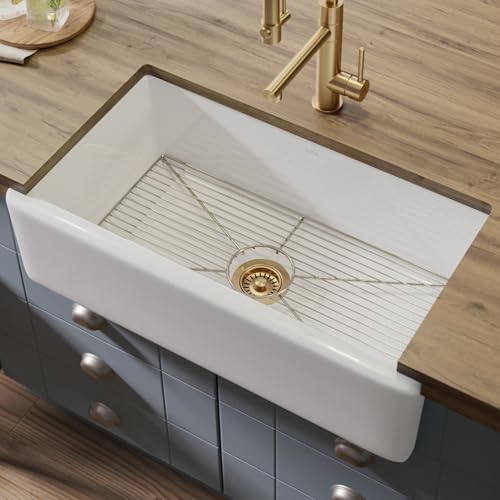
The Kraus Turino KFR1-33GWH is a 33-inch fireclay farmhouse sink that blends Italian craftsmanship with practical, modern features. Designed for homeowners undergoing a kitchen renovation, this reversible apron front sink lets you choose between a classic rounded look or a flat contemporary front. It comes with a stainless steel bottom grid and is built to withstand heavy daily use.
Standout features include the spacious single bowl, which measures 33 inches long and 10 inches deep, easily handling large stockpots and baking sheets. The fireclay material is kiln-fired at high temperatures, creating a non-porous, glossy surface that resists stains, scratches, and heat up to 300°F. Real-world performance is strong: users report it holds up beautifully over months of use, with easy cleaning and no chipping. The included bottom grid elevates dishes for drainage and protects the sink floor.
Design and build quality are top-notch. The sink is heavy and solid, with a thick porcelain enamel finish that feels premium. The reversible apron is a thoughtful touch, and the rounded corners minimize dirt buildup. Installation requires careful cabinet preparation due to the front taper and the sink's weight, but the result is a seamless, high-end look.
Some drawbacks: the sloped bottom is not as aggressive as some might like, making it slightly harder to chase food particles toward the drain. A few users noted that the plastic feet on the grid can detach, though Kraus appears to have addressed this in newer production runs. Also, the sink is very heavy, so professional installation is recommended.
Overall, the Kraus Turino offers exceptional value for a premium fireclay sink. It delivers on durability, style, and functionality, making it a smart choice for anyone seeking a high-quality farmhouse sink without breaking the bank. Just be prepared for a heavy lift and precise cabinetry work.

Pros
- Spacious interior easily washes large cookware without splashing.
- Stain and scratch resistant surface stays beautiful with minimal maintenance.
- Includes high-quality bottom grid and strainer, saving you extra cost.
- Pure white glaze maintains its color for years without yellowing.
- Sturdy fireclay material fired at high temperatures for exceptional durability.
Cons
- Very heavy (78 lbs) requires two people for safe handling and installation.
- Needs a minimum cabinet size of 36 inches wide and 21 inches deep, which may not fit all kitchens.
- Single bowl design means no separate washing and rinsing area for multitasking.
The HOMLYLINKDECO 33x18 inch fireclay farmhouse sink is a standout choice for anyone seeking a classic, spacious, and durable kitchen sink. Designed for homeowners undergoing a kitchen remodel or upgrade, this single bowl apron front sink combines timeless white aesthetics with modern performance. It is particularly suited for those who frequently wash large pots, baking sheets, or even small children (as one reviewer noted) thanks to its generous internal dimensions of 16.5x31.25x9 inches.
What sets this sink apart is its non-porous, high-gloss fireclay surface that resists stains, scratches, and heat. Real-world reviews confirm it cleans up easily with a damp cloth and stays bright white without yellowing over time. The included stainless steel bottom grid protects both the sink and your dishes, while the basket strainer helps keep drains clear. The smooth R10 rounded corners make wiping down a breeze, adding to the low-maintenance appeal.
Build quality is exceptional. The sink weighs 78 pounds, a testament to its solid fireclay construction fired at over 2300 degrees Fahrenheit. This weight gives it a substantial, premium feel and ensures it won't flex or dent. The undermount installation creates a seamless countertop transition, though you must have a cabinet at least 36 inches wide and 21 inches deep. The sink comes with a 3-year limited warranty, reflecting the manufacturer's confidence in its durability.
However, potential buyers should consider a few drawbacks. The sheer weight makes it a two-person job to move and install, and the single bowl design means you cannot multitask with separate washing and rinsing basins. Additionally, the required cabinet size may exclude smaller kitchens. But for those with adequate space, the spacious bowl and easy maintenance outweigh these concerns.
Overall, the HOMLYLINKDECO farmhouse sink delivers outstanding value for its price point. It combines a beautiful, stain-resistant finish with a cavernous interior that simplifies daily kitchen tasks. If you want a sink that looks great, performs reliably, and will last for years, this is a top recommendation.

Pros
- Heavy-duty fireclay construction withstands heavy use and resists chipping.
- Glossy white surface resists stains and scratches, staying like new.
- Large single bowl accommodates large cookware and simplifies washing.
- Includes bottom grid and strainer, saving time and money on accessories.
- Reversible apron front offers flexible installation options.
Cons
- Very heavy (73 lbs) and requires sturdy cabinet support and two-person installation.
- Fireclay surface can scratch if abrasive pads or heavy objects are used without the bottom grid.
- Exact dimensions may vary slightly, requiring careful measurement for perfect fit.
The Miuara 33x18 inch white fireclay farmhouse sink is a premium apron front sink designed for homeowners seeking both classic beauty and rugged durability. It is ideal for busy kitchens where heavy cookware is used daily.
Its standout feature is the fireclay construction fired at over 2600°F, resulting in a dense, non-porous surface that resists stains, scratches, and heat. Real-world performance is excellent: the ultra-smooth glaze makes cleaning a breeze, and the flat bottom with gentle slope ensures water drains efficiently without pooling.
The design is timeless with a high-gloss white finish that complements farmhouse, traditional, and modern kitchens. The R15 rounded corners eliminate hard-to-clean crevices, and the reversible apron allows flexible installation. The included stainless steel bottom grid and strainer add immediate value.
A notable drawback is the sink's weight (73 pounds), which requires adequate cabinet support and two people for installation. Some users note that the fireclay can scratch if the bottom grid is not used, so care is needed with abrasive materials. Also, exact dimensions may vary slightly, so precise measurement is recommended.
Overall, the Miuara farmhouse sink offers outstanding quality and value for its price. With a 4.7-star rating and a 3-year warranty, it is a reliable choice for anyone wanting a durable, easy-to-clean apron front sink that will stay beautiful for years.
Pros
- Beautiful high-gloss finish that resists stains and scratches, maintaining its appearance over time.
- Heavy-duty fireclay construction feels solid and durable, with a premium weight that signals quality.
- Large, deep single bowl accommodates bulky cookware, making meal prep and cleanup easier.
- Includes protective grid and drain assembly, adding value and convenience.
- Competitive price for the quality, often compared favorably to big-box store alternatives.
Cons
- Requires a 36-inch cabinet minimum, limiting installation options for smaller kitchens.
- Mounting a garbage disposal may require additional adapter parts, as the included drain assembly is designed for standard use.
- Installation is complex due to the sink's weight; professional help is recommended for proper support and leveling.
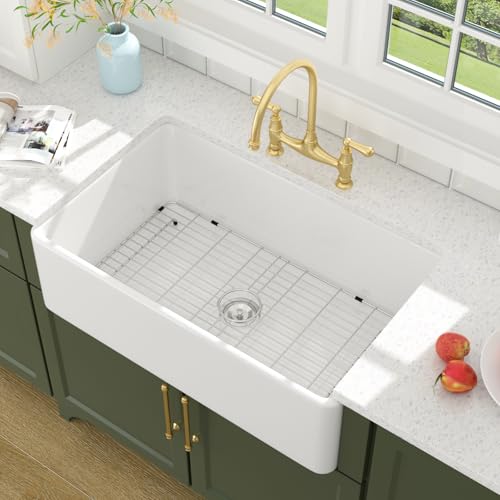
The Lordear 33 inch white farmhouse sink is a premium fireclay apron front sink designed for homeowners who want durable, stylish kitchen fixtures. It is ideal for those remodeling or building a kitchen with a 36-inch cabinet base and seeking a reliable, easy-to-clean sink.
Fired at over 2900°F, the fireclay construction resists chips, scratches, and stains, maintaining its glossy white finish for years. The 10-inch deep single bowl accommodates large pots, and the sloped bottom ensures quick drainage. Users report it stays clean with minimal effort.
The sink's classic apron front adds timeless farmhouse charm, with smooth rounded corners. Its heavy weight (over 80 lbs) signals solid construction. The included stainless steel grid protects the bottom, and the basket strainer handles standard drainage.
Installation requires careful planning; the sink is heavy and needs proper support. Mounting a garbage disposal may require a separate flange, as noted in reviews. The 36-inch cabinet requirement limits options for smaller kitchens.
Overall, the Lordear farmhouse sink delivers exceptional value with its combination of beauty, durability, and affordability. It is a top choice for anyone seeking a high-quality fireclay sink without the premium price tag. Highly recommended for farmhouse-style kitchens.
Brand: Lordear
Model: 33'' Sink
Material: Fireclay
Finish: Glossy White Glaze
Dimensions: 33"W x 20"D x 10"H
Installation Type: Undermount
Drain Type: Grid (includes basket strainer)
Cabinet Requirement: 36 inch minimum
Weight: Approximately 80 lbs
Includes: Stainless steel grid, basket strainer
ASIN: B0DQTZM452

Pros
- Exceptional durability from high-fire fireclay material
- Easy to clean and maintain non-porous surface
- Deep 10-inch bowl accommodates large cookware
- Efficient drainage design reduces clogs and standing water
- Classic apron front style enhances kitchen aesthetics
Cons
- Heavy at 70 pounds may require reinforced cabinet support
- White finish may show water spots or stains more readily than darker colors
- No customer reviews available yet to verify long-term performance
The GETPRO 30 inch white fireclay farmhouse sink is a premium undermount option for homeowners who want a blend of classic farmhouse charm and modern durability. This single bowl apron front sink is crafted from genuine fireclay fired at high temperatures, resulting in a non-porous, glossy surface that resists scratches, stains, and heat. It is ideal for busy kitchens where heavy daily use is expected, and its deep 10 inch basin provides plenty of room for washing large pots or stacking dishes.
Standout features include the flat bottom sloped drainage system that efficiently channels water toward the drain, reducing the risk of clogs and standing water. The sink also comes with a protective bottom grid and a stainless steel drain, which add to its practicality. The fireclay material is notably easy to clean with mild soap and water, and it is compatible with standard garbage disposals, enhancing its functionality for everyday meal prep and cleanup.
Design and build quality are impressive: the glossy white finish has a timeless appeal that suits both farmhouse and contemporary kitchens. The sink measures 30 inches wide by 18 inches deep by 10 inches high, and it requires a minimum 33 inch base cabinet. The apron front allows for comfortable ergonomic access, and the undermount installation creates a seamless countertop look. However, the sink is heavy at 70 pounds, so proper cabinet reinforcement is necessary during installation.
One potential drawback is that there are no existing customer reviews, so long-term reliability is not yet proven. Additionally, the white glossy surface, while easy to clean, may show water spots or mineral deposits more than darker finishes. The sink is also relatively large and deep, which may not be ideal for smaller kitchens or those who prefer a shallower basin.
Overall, the GETPRO 30 inch fireclay farmhouse sink offers excellent value for its price, combining durable construction with practical features. It is a strong choice for anyone remodeling a kitchen with a farmhouse or transitional style, provided the installation requirements are met. The included accessories and thoughtful design make it a compelling option in the single bowl sink category.

Pros
- Excellent value compared to similar farmhouse sinks
- Spacious, deep bowl holds large pots and pans
- Included accessories add real functionality
- Quick drainage and easy-to-clean surface
- High-quality 304 stainless steel with beautiful finish
Cons
- Installation can be challenging and may require professional help or cabinet modifications
- The included shelf or grate insert can make retrieving small items slightly awkward
- Sink may protrude further than expected depending on cabinet depth
The VEVOR 33-inch farmhouse kitchen sink is a practical and attractive upgrade for busy kitchens, prep areas, garages, and bars. It is a drop-in, top-mount single bowl sink made from 304 stainless steel, with a front apron design that adds a rustic, modern aesthetic. The included accessories, including a wood cutting board, stainless drain rack, and draining basket, turn the sink into a versatile workstation.
In real-world use, this sink offers generous space for washing large dishes and cookware. The deep 10-inch basin and sloped bottom with X-shaped drainage channels allow water to flow quickly to the rear drain, even with the faucet on full blast. Customers frequently praise the sink's size, depth, and quality finish.
The build quality stands out at this price point. The 304 stainless steel body is sturdy, heat resistant, and resists scratches and rust, especially with the included sink protector. Rounded corners make cleaning easy, and the brushed surface minimizes visible water spots and fingerprints.
Potential drawbacks include a more involved installation with larger cabinets and countertops requiring modification, and the optional shelf insert can sometimes trap small items. Some users also note the sink may protrude a bit further than expected, depending on cabinet depth.
Overall, the VEVOR farmhouse sink is an outstanding value for DIY remodelers and homeowners seeking a functional, stylish kitchen upgrade without spending a premium. It delivers professional performance and a polished look, making it easy to recommend for anyone outfitting a home kitchen or utility space.
Brand: VEVOR
Model Number: TXHW332209RS1
Material: 304 Stainless Steel
Product Dimensions: 33 inches D x 22 inches W x 10 inches H
Installation Type: Top Mount, Drop-In
Drain Type: Lift and Turn
Included Components: Chopping Board, Drainer Basket, Drying Rack, Sink Protector
Number of Holes: 1
What to Look for When Buying a Farmhouse Sink
Material Durability and Finish Quality
The material you choose directly impacts how your sink performs and looks over the years. Fireclay sinks, fired at extremely high temperatures (often above 2,600 degrees Fahrenheit), create a non-porous, ultra-durable surface that resists stains, scratches, and chipping far better than standard ceramics. Solid copper sinks, meanwhile, develop a rich patina that actually improves with age, creating a unique character that cannot be replicated.
Stainless steel farmhouse sinks offer a different appeal, providing a modern, easy-to-clean surface that works beautifully in contemporary kitchens. The glaze quality matters tremendously, too. Look for sinks with ultra-fine, high-technology glazes that resist yellowing and maintain their glossy finish through years of daily use.
Size, Depth, and Installation Type
Farmhouse sinks range from 30 inches to 34 inches in width, with depths typically between 9 and 10 inches. Your choice depends on your cabinet space and how you use your sink. A 10-inch depth accommodates large stockpots and sheet pans without splashing, while a 30-inch sink works well in smaller kitchens or as a secondary prep sink.
Installation type matters just as much. Drop-in models sit on top of your existing countertop and require minimal cabinet modification, making them ideal for quick updates. Undermount sinks create a seamless, modern look but demand more substantial cabinet support and careful installation. Consider whether you’re doing a full kitchen remodel or working with existing cabinetry, as this choice significantly affects both cost and complexity.
Drainage Design and Accessory Inclusions
A well-designed drainage system prevents pooling and makes daily cleanup effortless. Look for sinks with sloped bottoms that direct water toward the center drain, ensuring rapid drainage even when you’re washing large batches of dishes. Many quality farmhouse sinks now include bottom grids and basket strainers to protect the sink surface and catch food debris before it reaches your plumbing.
Some models go further, offering cutting boards, roll-up racks, or workstation accessories that transform your sink into a multifunctional kitchen hub. These extras save valuable countertop space and add versatility to your workspace. Review what’s included with each model, as accessories can represent significant value. For more insights on kitchen organization, explore our best products collection for complementary items.
Maintenance Requirements and Longevity
Different materials demand different care routines. Fireclay sinks require gentle cleaning with soft cloths and mild soap, as abrasive scrubbers can dull the glaze over time. Copper sinks develop patina naturally and benefit from occasional conditioning to guide the aging process. Stainless steel demands regular polishing to prevent water spots and maintain its shine.
Consider your willingness to invest time in maintenance when selecting your sink. Some homeowners love the evolving character of a patina-developing copper sink, while others prefer the consistent appearance of a fireclay finish that stays glossy for decades. Manufacturer warranties and customer support also matter, particularly for high-end investments. Check out our comparison guides to see how we evaluate durability across product categories.
Final Thoughts
Choosing the right farmhouse sink transforms your kitchen into a space that’s both beautiful and functional. If you want solid durability with timeless style, the Miuara Farmhouse Sink delivers exceptional value with its high-fired fireclay construction and included accessories. For those seeking luxury and lasting character, the Sinkology Lange in solid copper offers a truly unique investment that improves with every year of use. Whatever your preference, investing in a quality farmhouse sink today means enjoying a beautiful, hardworking kitchen centerpiece for decades to come.
Frequently Asked Questions
What is the difference between fireclay and ceramic farmhouse sinks? Fireclay sinks are fired at much higher temperatures (often above 2,600 degrees Fahrenheit) than standard ceramic, creating a denser, more durable surface. This process makes fireclay far more resistant to chipping, staining, and cracking, and the glaze lasts longer without yellowing. While both are beautiful, fireclay represents a significant upgrade in durability and longevity.
Can I install a farmhouse sink in my existing kitchen without replacing my countertop? Yes, if you choose a drop-in model with the Quick-Fit installation style. These sinks sit on top of your existing countertop and require only a small opening cut for the apron front. You’ll need a minimum 36-inch base cabinet and about an hour to complete the installation. Undermount sinks require countertop removal and more extensive cabinet modification, so they’re better suited for full kitchen remodels.
Do farmhouse sinks work with garbage disposals? Most quality farmhouse sinks are compatible with standard 3.5-inch garbage disposal units. However, because many farmhouse sinks have thick bottoms (often 3/4 inch to 1 inch), you may need a deep flange for proper installation. Always check the product specifications and consult with your plumber before purchasing to ensure compatibility with your existing or planned disposal system.
How do I maintain the finish on my farmhouse sink throughout 2026? Maintenance depends on your sink material. Fireclay sinks need only gentle cleaning with soft cloths and mild soap, avoiding abrasive scrubbers that can dull the glaze. Copper sinks develop patina naturally and benefit from occasional conditioning treatments to guide the aging process. Stainless steel requires regular polishing to prevent water spots. Most manufacturers offer care kits designed specifically for their sinks, making maintenance straightforward and ensuring your investment stays beautiful for many years.


