There’s something deeply satisfying about pouring tea from a beautiful English teapot. Whether you’re hosting afternoon tea with friends or enjoying a quiet moment alone, the right teapot transforms a simple beverage into a ritual. English teapots have earned their reputation for combining aesthetic charm with reliable functionality, and finding one that matches your lifestyle and décor can feel overwhelming with so many options available.
This guide walks you through five exceptional English teapots that span different styles, materials, and price points. Whether you prefer delicate bone china, practical porcelain, or modern glass, you’ll find a detailed comparison to help you make an informed choice. We’ve evaluated each option based on durability, design, capacity, and everyday usability.
If you’re interested in exploring other brewing vessels, our guide to stainless steel teapots offers complementary perspectives on material choices.
Pros
- Exceptional versatility works on gas, electric, and ceramic stovetops, plus microwave and refrigerator safe
- Premium borosilicate glass construction resists thermal shock and temperature extremes
- Removable high-grade stainless steel infuser makes brewing and cleaning straightforward
- Non-dripping spout and ergonomic handle deliver comfortable, controlled pouring
- Generous 1000ml capacity suits individual servings or small gatherings
Cons
- Borosilicate glass requires careful handling to avoid breakage if dropped or knocked over
- Medium heat recommended for stovetop use, which may require longer heating times than metal kettles
- Requires hand cleaning for the infuser basket to maintain mesh filter integrity over time
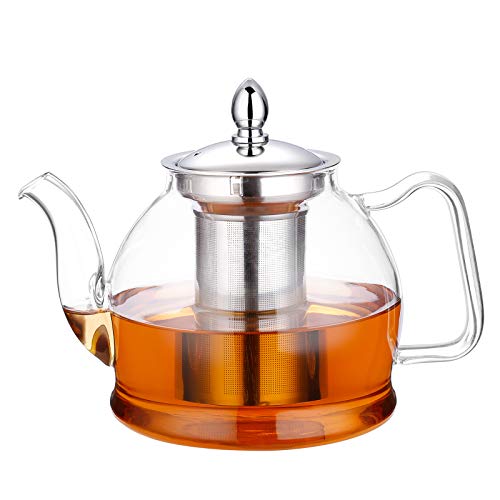
The HIWARE 1000ml glass teapot is purpose-built for tea enthusiasts who appreciate the ritual and quality of loose leaf brewing. This hand-crafted teapot combines heat-resistant borosilicate glass with a removable stainless steel infuser, making it perfect for anyone transitioning from tea bags to premium loose leaf varieties. Whether you're a daily tea drinker or an occasional enthusiast, this teapot delivers reliable performance at an accessible price point.
The standout feature is the removable high-grade 18/10 stainless steel mesh infuser, which allows full leaf expansion for optimal flavor extraction. The teapot excels across multiple brewing methods: traditional hot brewing on the stovetop, microwave heating for convenience, cold brewing in the refrigerator, or sun brewing in direct sunlight. The non-dripping spout and ergonomic handle ensure comfortable pouring without spills, while the secure lid fits whether the infuser is inserted or removed, giving you flexibility in how you brew.
Build quality stands out with thicker borosilicate glass construction designed for everyday use without compromising on aesthetics. The hand-crafted design feels premium, and the 1000ml capacity suits both individual servings and small gatherings. Cleanup is straightforward since the teapot is dishwasher safe on the top rack, though hand washing the infuser basket preserves the mesh filter quality over extended use.
The main consideration is that borosilicate glass requires careful handling to prevent breakage, and stovetop heating works best on medium heat rather than high flame. These minor limitations are typical for glass teapots and don't detract from the overall value proposition. The brand's confidence in their product is evident in their customer support guarantee.
This teapot represents excellent value for loose leaf tea enthusiasts seeking a versatile, durable brewing vessel that works across multiple heating methods. Its combination of premium materials, thoughtful design, and practical functionality makes it a smart investment for anyone serious about their tea experience.
For optimal results with your HIWARE teapot, start by filling with fresh, filtered water and heating on medium stovetop heat or in the microwave. Once water reaches your desired temperature, add loose tea leaves to the removable infuser basket and insert into the teapot. Steep times vary by tea type: green teas typically need 2-3 minutes, black teas 3-5 minutes, and oolong teas 3-7 minutes depending on leaf size and desired strength.
For cold brewing, fill the teapot with room temperature water, add loose tea to the infuser, and refrigerate for 6-12 hours. Sun brewing works similarly, but place the teapot in direct sunlight for 2-4 hours to let UV rays gently extract flavors. The removable infuser makes it easy to remove spent leaves and prevent over-steeping, ensuring consistent, delicious tea every brew.
To reheat brewed tea, you can place the teapot directly on the stovetop over medium heat, use the microwave, or set it on a tea warmer. The teapot's thick borosilicate glass retains heat exceptionally well, so your tea stays hot for extended periods without additional heating.
What to Consider When Choosing an English Teapot
Material and Durability
The material you choose affects both aesthetics and longevity. Bone china, like that found in Royal Albert collections, offers superior strength and a refined appearance but requires gentle care. Porcelain provides a middle ground with durability and easy maintenance, while glass teapots showcase the brewing process beautifully and handle stovetop use well.
Consider your daily habits: do you prefer microwave reheating, stovetop brewing, or traditional pouring? Some materials excel in specific scenarios, and matching your teapot to your routine ensures years of enjoyment without frustration or damage.
Capacity and Serving Size
English teapots range from intimate two-cup designs perfect for solo tea lovers to generous 42-ounce vessels ideal for entertaining. Think about your typical usage: do you brew for yourself, occasionally for a guest, or regularly host tea gatherings? A smaller teapot stays easier to handle and heats water faster, while larger capacities reduce the need for multiple brews.
The capacity also influences brewing time and tea quality. A properly-sized pot ensures your tea steeps at the right temperature without cooling too quickly or oversteeping while waiting for companions to settle in.
Design and Aesthetic Appeal
Your teapot sits on display, so design matters as much as function. Traditional patterns like Blue Willow carry historical significance and timeless elegance, while simple white porcelain designs suit modern minimalist kitchens. Victorian-inspired motifs and rose patterns evoke classic English charm and coordinate beautifully with existing tableware.
Consider how your teapot will coordinate with your cups, saucers, and overall kitchen aesthetic. Many collections allow you to mix and match pieces, so choosing a complementary pattern opens creative styling possibilities. For more inspiration on traditional brewing styles, explore our Chinese teapot guide, which showcases different cultural approaches to teapot design.
Practical Features and Maintenance
Modern English teapots balance tradition with convenience. Dishwasher and microwave safety matter if you value easy cleanup, while security lids prevent spills during pouring. Hand-washing recommendations for bone china reflect care requirements that preserve delicate glazing and gold banding over decades of use.
Check whether your preferred teapot includes an infuser basket for loose-leaf tea or if you’ll need to purchase one separately. Removable stainless steel filters enhance versatility and make cleaning simpler. These small details significantly impact your daily brewing experience. Our cast iron teapot article discusses maintenance considerations for different materials in greater depth.
Final Thoughts
The finest English teapot for your home depends on your brewing habits, aesthetic preferences, and maintenance comfort level. If you value timeless elegance and don’t mind hand-washing, Royal Albert Old Country Roses Teapot Large delivers iconic beauty with bone china sophistication. For those seeking everyday practicality without sacrificing style, English Tea Store Diana White Porcelain Teapot offers microwave and dishwasher convenience in a charming compact design that suits modern lifestyles perfectly.
Frequently Asked Questions
What’s the difference between English bone china and porcelain teapots? Bone china contains at least 30 percent bone ash, making it stronger and whiter than porcelain while remaining more delicate than stoneware. Porcelain offers excellent durability and easier maintenance, though it lacks the refined translucency of bone china. Both materials retain heat effectively, so your choice depends on whether you prioritize elegance or practicality.
Can I use an English teapot on the stovetop? Not all English teapots suit stovetop use. Porcelain and bone china pieces are designed for pouring hot water poured from a kettle, while glass teapots like those made from borosilicate glass can handle direct heat. Always check the manufacturer’s instructions before attempting stovetop heating, as some decorative pieces may crack or damage their glazing.
How do I care for a vintage or delicate English teapot? Hand-wash bone china and decorated porcelain teapots in warm soapy water, avoiding abrasive scrubbers that damage glazing and gold banding. Store in a stable location away from direct sunlight to prevent fading, and allow pieces to dry naturally rather than toweling them dry. For comprehensive care guidance, check the Coffee & Tea category for additional maintenance resources.
What capacity should I choose for brewing tea in 2026? A two to four-cup teapot suits solo drinkers and intimate gatherings, while a 40-ounce vessel accommodates four to six servings comfortably. Consider your most common brewing scenario: daily personal use benefits from smaller sizes that heat quickly, whereas regular entertaining justifies a larger investment that reduces refilling frequency during social occasions.