You have just finished slicing a ripe tomato for your lunch salad. You reach for your wooden cutting board, only to find it stained pink from last night’s beets and carrying a faint garlic odor. This is a familiar frustration for many home cooks. In this guide, we compare titanium cutting board vs wood cutting board to help you decide which material better suits your cooking habits and kitchen hygiene needs. Whether you are a meal prep enthusiast or a casual cook, understanding these differences will lead to a smarter purchase.
We have evaluated four top-rated titanium cutting boards alongside traditional wood options. Our goal is to provide clear, practical insights so you can choose the right surface for chopping, slicing, and dicing. For a broader look at the best options available, check out our best cutting board set for 2026.



Buying Guide: What to Consider When Choosing Between Titanium and Wood Cutting Boards
Hygiene and Odor Resistance
One of the biggest concerns with wood cutting boards is their porous nature. Wood can absorb juices from raw meat, garlic, and onions, leading to lingering smells and potential bacterial growth. Titanium cutting boards, like the Titanium Cutting Board for Kitchen from Sumzzz, feature a non-porous surface that resists odors and stains. This makes them a strong choice for those who frequently handle strong-smelling ingredients.
If you prioritize a board that stays fresh after every use, titanium offers a clear advantage. Wood boards require regular oiling and deep cleaning to maintain their condition. For more on kitchen hygiene, explore our Cookware category.
Durability and Knife Friendliness
Wood cutting boards are known for being gentle on knife edges. The natural fibers give slightly under the blade, reducing dulling. Titanium, being a metal, is much harder. While it will not warp or crack like wood, it can dull knives faster if you use a heavy hand.
For home cooks who use high-quality chef knives, a wood board may be preferable for daily slicing. However, many titanium boards, including the Titanium Cutting Boards For Kitchen,Ebony Wood by Hilmon, offer a smooth surface that is still effective for most cutting tasks. If you do a lot of heavy chopping, consider pairing a titanium board with a separate wood board for delicate work.
Maintenance and Cleanup
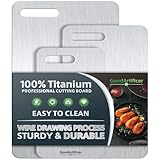
Wood cutting boards require careful maintenance. They should be hand washed, dried immediately, and periodically treated with mineral oil to prevent drying and cracking. Titanium boards, on the other hand, are remarkably low maintenance. The Titanium Cutting Board for Kitchen from GoodArtificer is dishwasher safe, making cleanup effortless.
For busy households, the ease of cleaning a titanium board can be a game changer. Simply rinse or run it through the dishwasher, and it is ready for the next use. Wood boards demand more attention, but many cooks find the ritual of caring for wood rewarding. For more tips on kitchen tools, see our guide on top kitchen gifts for mom.
Versatility and Design Features
Modern titanium cutting boards often come with thoughtful design elements. Many include juice grooves to catch liquids, garlic grinding areas, and non-slip edges. The Titanium Cutting Board for Kitchen by Mirtan offers a dual-sided surface with a pure titanium side and a food-safe PP side, giving you two functions in one board.
Wood boards typically have a classic look and can double as serving platters for cheese or charcuterie. However, they rarely offer built-in features like grinding zones. If you value multifunctionality, a titanium board may better suit your needs. For more on cookware versatility, read our best large cast iron skillet and Best Stainless Steel Bread Pan for 2026.
Final Thoughts
After comparing titanium cutting board vs wood cutting board, it is clear that both materials have their strengths. For those who prioritize hygiene, easy cleaning, and modern features, the Titanium Cutting Board for Kitchen from Sumzzz stands out as a versatile, non-porous option. If you prefer a classic surface that is gentle on knives and doubles as a serving piece, the Titanium Cutting Boards For Kitchen,Ebony Wood by Hilmon offers a hybrid approach with its wood and titanium combination. Whichever you choose, your kitchen prep will benefit from a thoughtful upgrade. For more inspiration, explore our best carbon steel paella pan.
Frequently Asked Questions
Is a titanium cutting board better than wood?
Titanium cutting boards are non-porous, making them more resistant to odors, stains, and bacteria compared to wood. However, wood boards are gentler on knife edges. The best choice depends on your priorities: hygiene versus knife care.
Can I use a titanium cutting board for all types of food?
Yes, titanium boards are safe for cutting meat, vegetables, fruits, and more. Their non-porous surface prevents cross-contamination, making them ideal for raw proteins. Many models also include a separate side for produce to keep ingredients organized.
How do I clean a titanium cutting board?
Most titanium cutting boards are dishwasher safe. For hand washing, use warm water and mild soap. The non-porous surface resists sticking, so food residue rinses off easily. Avoid abrasive scrubbers to maintain the finish.
Will a titanium cutting board dull my knives?
Titanium is harder than wood, so it can dull knives faster over time. However, many users find the difference minimal for typical home use. To extend knife life, use a gentle cutting motion and keep your blades sharp. For more on kitchen tools, check out our Best Products page.