

You’ve just pulled your first shot of espresso, and it’s bitter, sour, or worse: watery. The culprit is often the grind. A blade grinder chops beans unevenly, leaving fine dust and coarse chunks that extract at different rates. The solution is a conical burr grinder, which crushes beans between two ridged surfaces for a uniform particle size.
In this guide, we’ve evaluated the best conical burr coffee grinder for espresso across popular brands like Breville, OXO, SHARDOR, and Ollygrin. Whether you’re a beginner or a seasoned home barista, we’ll help you choose the right model for your budget and workflow. For more coffee gear insights, check out our coffee and tea collection.





Buying Guide: What to Look for in a Conical Burr Grinder for Espresso
Grind Consistency and Burr Quality
The heart of any grinder is its burrs. Stainless steel conical burrs are preferred for espresso because they produce fewer fines and more uniform particles. Look for burrs that are at least 40mm in diameter, as they offer a good balance of speed and precision.
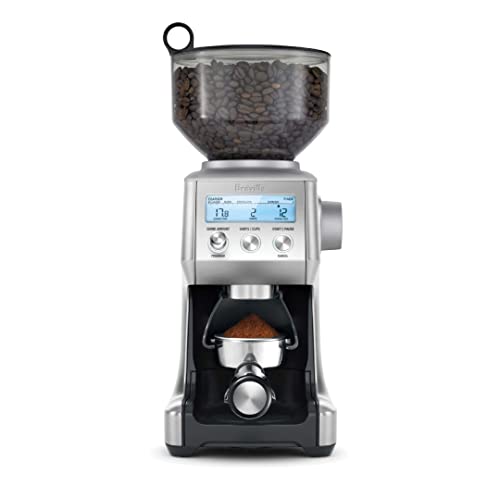
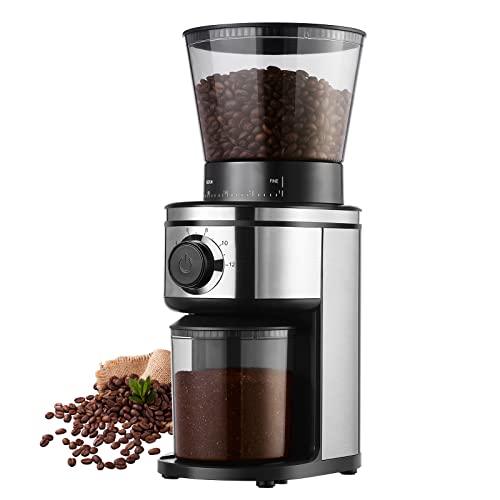
For example, the SHARDOR model features a 40mm stainless steel conical burr, while the Breville Smart Grinder Pro uses a 40mm burr as well. Higher-end models may use hardened steel or even ceramic, but for home use, stainless steel is durable and reliable.
Number of Grind Settings
Espresso requires very fine adjustments. A grinder with only a few settings may not let you dial in your shot perfectly. Look for grinders with at least 30 settings, but ideally 40 or more, to give you the flexibility to fine-tune the grind size.
The Breville BCG820BSS offers 60 settings, while the Aromaster has 48. Even budget options like the Ollygrin provide 30 settings, which is a good starting point. If you’re serious about espresso, more steps mean better control.
Dosing and Timer Features
Consistent dosing is key to reproducible espresso. Many grinders now include timers that let you set the grind duration, ensuring the same amount of coffee each time. Some even have a portafilter cradle, so you can grind directly into your filter basket.
The SHARDOR grinder has a precision timer with 0.1-second increments, while the Breville allows 0.2-second adjustments. These features help you hit your target dose without weighing every shot, saving time and reducing waste.
Ease of Cleaning and Anti-Static Design
Ground coffee can be messy, especially with static electricity causing grounds to fly everywhere. Look for grinders with anti-static technology, like the SHARDOR or Aromaster, to keep your counter clean. Also, check if the burrs are removable for easy cleaning.
Removable upper burrs are a plus, as they allow you to brush off retained grounds. The OXO Compact model has removable upper and lower burrs, making it simple to maintain. For more kitchen tips, explore our kitchen gift ideas.
Final Thoughts
Choosing the best conical burr coffee grinder for espresso depends on your budget and how much control you want. For a balance of precision and value, the Breville BCG820BSS Smart Grinder Pro stands out with its 60 settings and programmable dosing. If you prefer a more compact and affordable option, the SHARDOR Conical Burr Espresso Coffee Grinder offers excellent consistency with its 51 settings and anti-static design. Both will elevate your espresso game.
Frequently Asked Questions
What is the difference between a conical and flat burr grinder?
Conical burrs have a cone-shaped inner burr and a ring-shaped outer burr, while flat burrs are two parallel rings. Conical burrs tend to produce fewer fines and are generally quieter, making them a popular choice for espresso at home.
How fine should I grind coffee for espresso?
Espresso requires a fine grind, similar to table salt but slightly finer. You’ll need to adjust based on your machine and taste, but a good starting point is a setting that produces a 25-30 second extraction time.
Can I use a conical burr grinder for other brewing methods?
Yes, most conical burr grinders offer a range of settings from fine to coarse, so you can grind for French press, pour-over, or cold brew. Just adjust the setting accordingly.
Do I need a separate grinder for espresso and drip coffee?
Not necessarily. A grinder with a wide range of settings, like the Breville Smart Grinder Pro, can handle both. However, if you switch frequently, you’ll need to adjust the setting each time, which can be a bit tedious. For more versatile kitchen appliances, check out our non-toxic air fryer toaster oven combos.
If you’re also curious about other kitchen gear, our Breville vs Cuisinart comparison might interest you. And for more top product roundups, visit our best products page.


